Drip Edge: Why Georgia Roofs Fail Without It
The short answer: Drip edge is the narrow metal flashing at roof eaves and rake edges. It directs runoff away from the roof deck and fascia. Georgia has required drip edge on asphalt-shingle roofs statewide since 2014, and the 2024 IRC effective in Georgia for 2026 continues the requirement.
Drip edge is easy to overlook because most of it disappears beneath the shingles. Yet this small metal profile protects one of the roof's most vulnerable places: the exposed edge where water, wind and insects can reach wood decking and fascia.
What Drip Edge Does
- Guides runoff away from the cut edge of the roof deck.
- Helps water clear the fascia and enter the gutter.
- Supports the edge of the shingles and underlayment.
- Reduces wind-driven rain at eaves and rakes.
- Creates a cleaner, more durable perimeter detail.
Georgia Code Requirements
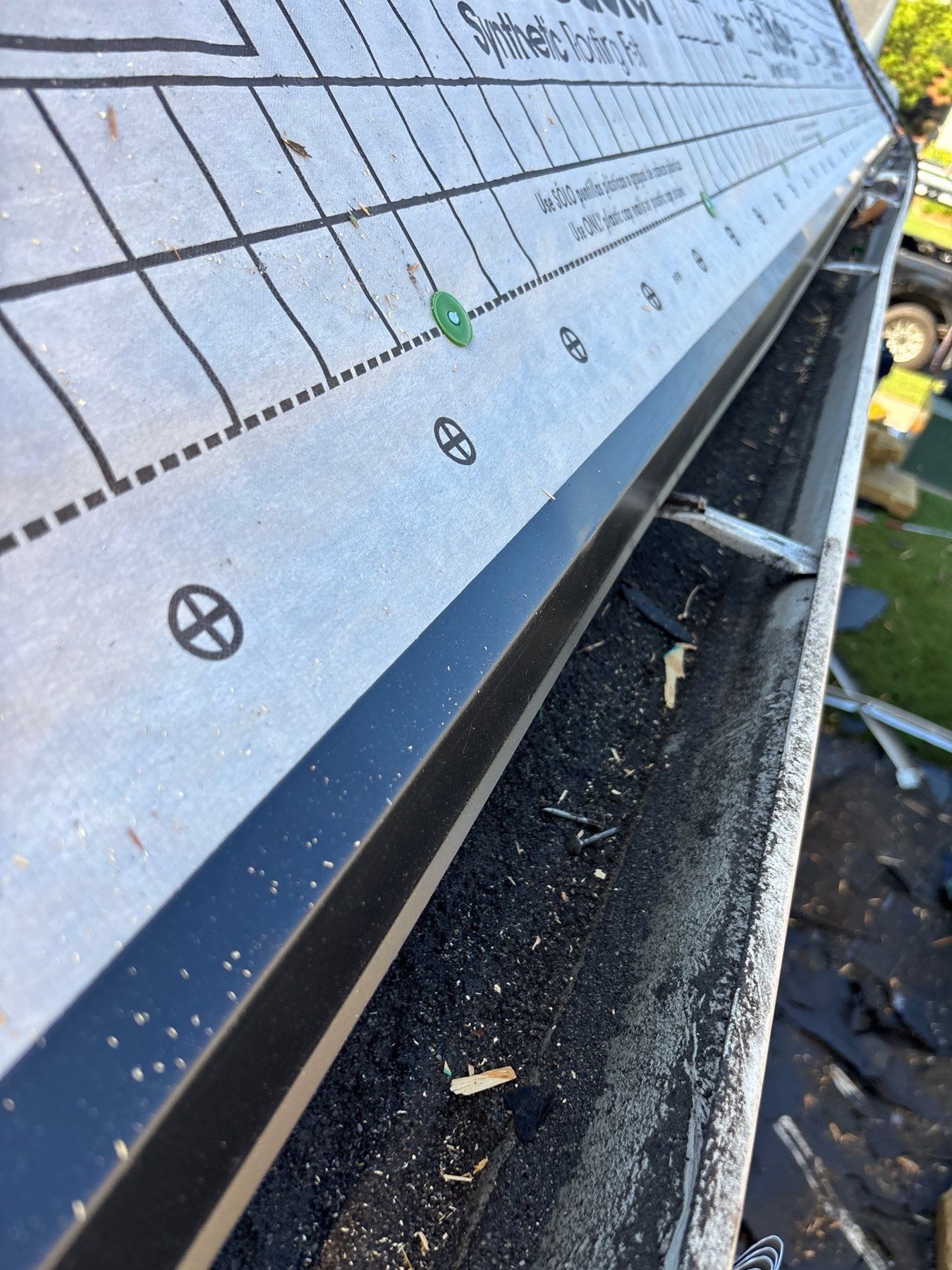
The Georgia Department of Community Affairs confirms that the 2024 International Residential Code with Georgia amendments became effective January 1, 2026. IRC Section R905.2.8.5 requires drip edge at eaves and rake edges of shingle roofs. Adjacent pieces must overlap at least 2 inches; the metal must extend at least 1/4 inch below the sheathing and at least 2 inches back onto the deck, with fasteners no more than 12 inches on center.
Layer order matters. At the eave, underlayment goes over the drip edge so water traveling on the underlayment exits onto the metal. At the rake, the drip edge goes over the underlayment to resist wind-driven entry.
Signs the Detail Is Missing or Wrong
- Dark staining or peeling paint along the fascia.
- Soft roof decking at the first few inches of the eave.
- Water running behind the gutter instead of into it.
- Shingle edges curling or sagging without support.
- A wide gap, short metal leg or fasteners spaced too far apart.
Clogged gutters can imitate a drip-edge failure. Before blaming the metal, inspect gutter pitch, hangers and downspout flow. Our Georgia gutter guide explains how overflow damages fascia and landscaping.
Can Drip Edge Be Added to an Existing Roof?
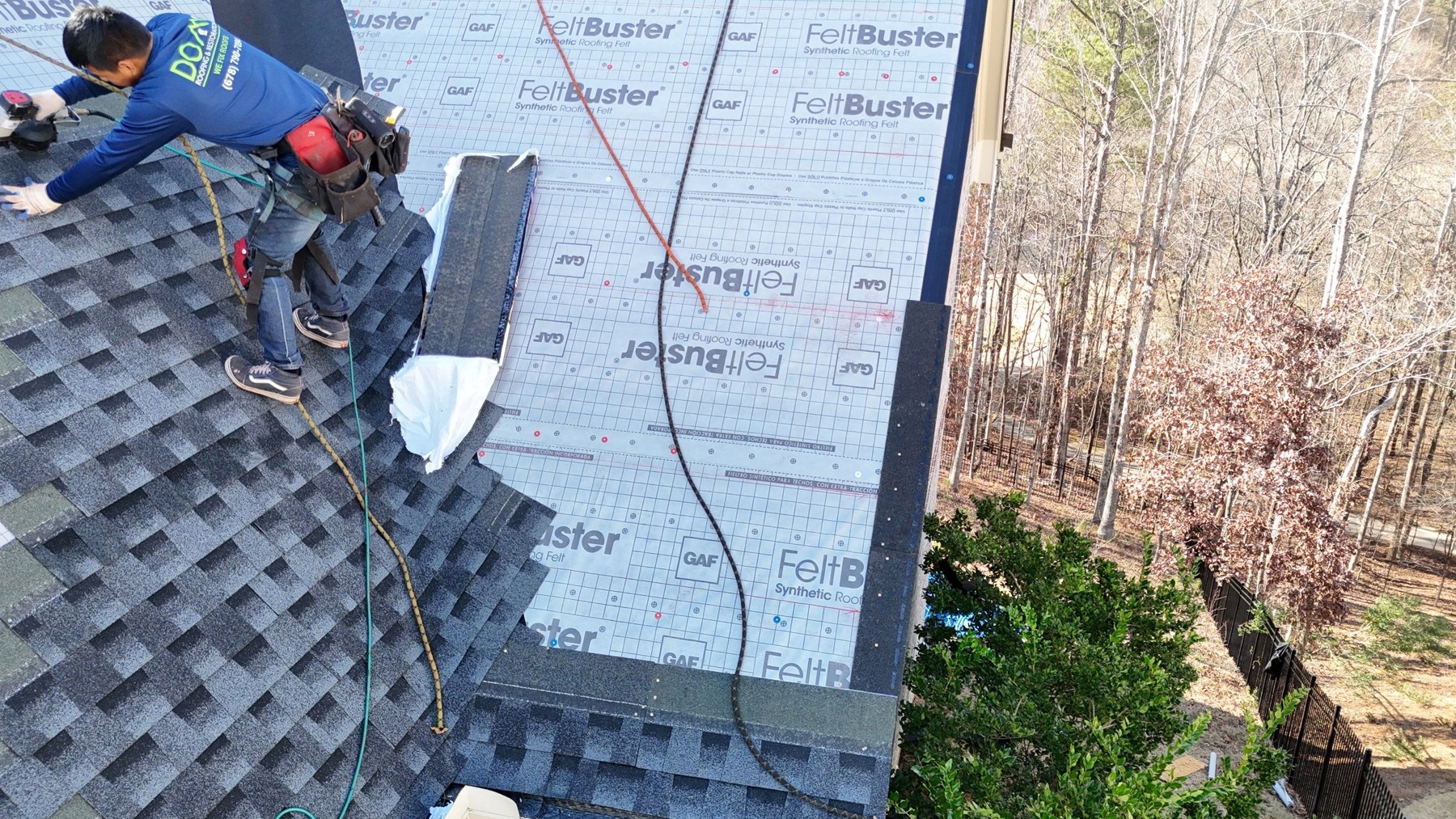
Sometimes. At an accessible eave with flexible shingles, a roofer may carefully integrate replacement metal without disturbing a large area. Brittle shingles, short underlayment, tight gutters or extensive rot can turn the work into a larger edge rebuild. Rake-edge correction is often more invasive because the metal must cover the underlayment.
Why This Matters in Metro Atlanta
Georgia thunderstorms drive rain sideways, while heat cycles move shingles and metal at different rates. A correct perimeter detail helps roofs in Sugar Hill, Suwanee, Lawrenceville and Atlanta handle both. It is also one of the code items that can appear on a replacement quote even when an older roof never had it.
When comparing roof proposals, look for drip edge by material, color and installation scope. “Code upgrades included” is less useful than a line item you can verify in the finished photos.
Not Sure What Your Roof Needs?
Get a free, photo-documented inspection from a local GAF Master Elite contractor serving Sugar Hill, Suwanee, Duluth and Metro Atlanta.
Schedule a Free Roof Inspection(678) 766-9646Frequently Asked Questions
Is drip edge required in Georgia?
Yes. Georgia has required drip edge at eaves and rake edges of asphalt-shingle roofs statewide since 2014; the current residential code continues the requirement.
Does drip edge go over or under underlayment?
At eaves, underlayment goes over the drip edge. At rake edges, drip edge goes over the underlayment.
Is drip edge the same as gutter apron?
They serve a similar water-shedding purpose, but profiles differ. The selected metal must integrate correctly with the deck, underlayment, fascia and gutter.
Can missing drip edge cause rotten decking?
Yes. Water can cling to the shingle edge and wet the deck or fascia repeatedly, especially when gutters overflow or sit too low.
Should drip edge be replaced with a new roof?
Usually. Replacement allows the roofer to inspect the edge, correct layer order and provide a continuous code-compliant perimeter.
Costs and service-life ranges are general 2026 planning guidance for Metro Atlanta and North Georgia. Actual conditions, local requirements, product instructions and insurance policy terms control your project.