
Roof Underlayment: Felt vs. Synthetic for Georgia Homes
The short answer: Roof underlayment is the secondary protective layer installed between shingles and roof decking. Asphalt-saturated felt is familiar and economical; synthetic underlayment is lighter, stronger and more tear-resistant. Neither replaces shingles or a properly detailed leak barrier.
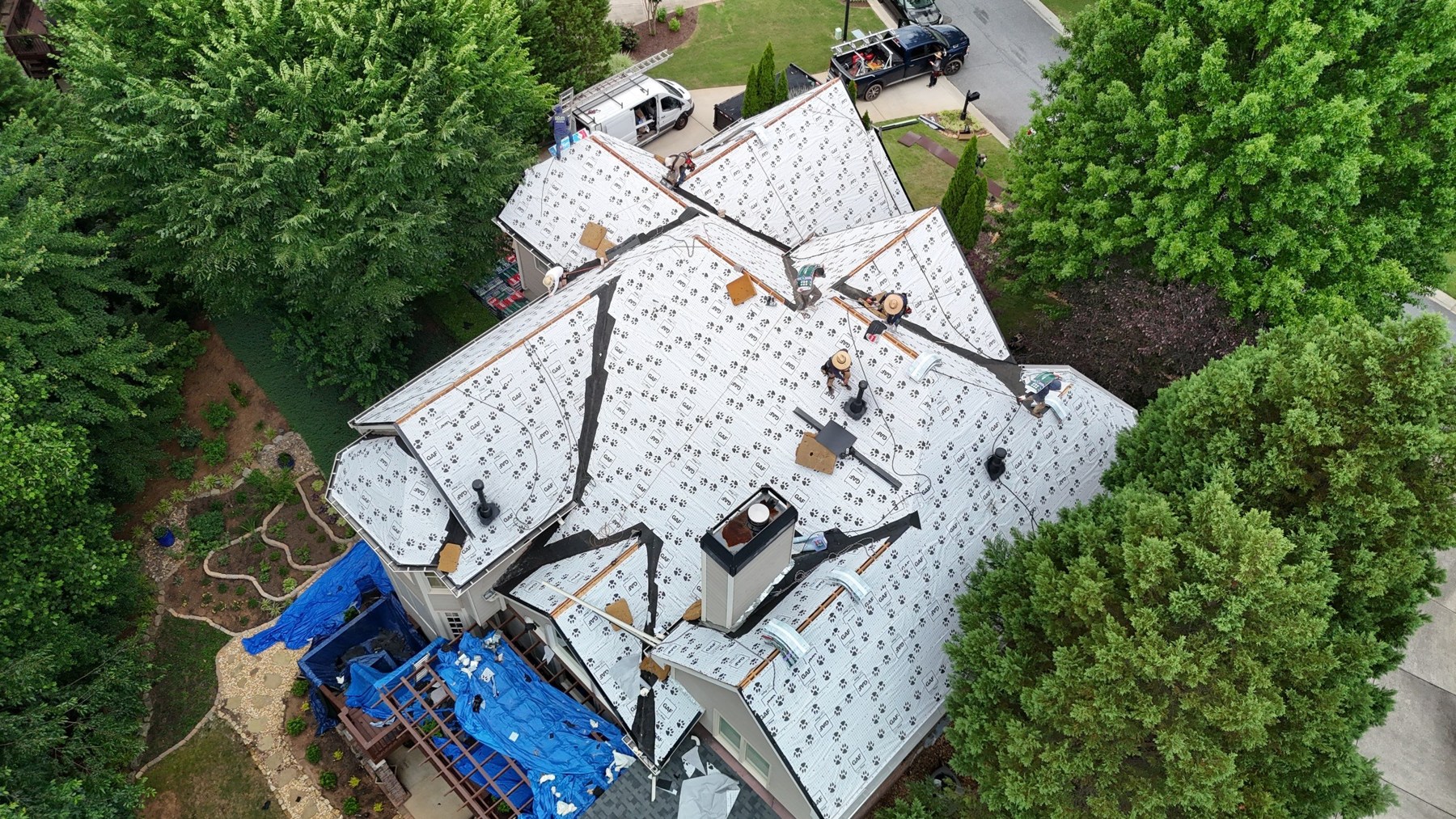
When shingles come off during replacement, the large sheet covering the wood deck is underlayment. Homeowners rarely see it again, yet it protects the deck during installation and provides secondary defense against wind-driven rain that reaches beneath the roof covering.
Felt vs. Synthetic Underlayment
| Factor | Asphalt felt | Synthetic |
|---|---|---|
| Base material | Organic or fiberglass mat saturated with asphalt | Engineered polymers, often polypropylene |
| Weight | Heavier per covered area | Lighter, larger rolls |
| Tear resistance | Can wrinkle or tear when wet | Generally stronger and flatter |
| Walkability | Varies; can become slick | Many products use high-traction surfaces |
| Exposure | Product-specific and usually limited | Often longer UV ratings, still product-specific |
| Cost | Lower material cost | Higher material cost, often faster installation |
GAF describes synthetic underlayment as an upgrade to typical felt because it resists tearing, does not absorb moisture and lies flatter. Product instructions still control fasteners, laps, slope limitations and maximum exposure.
Underlayment Is Not a Temporary Roof
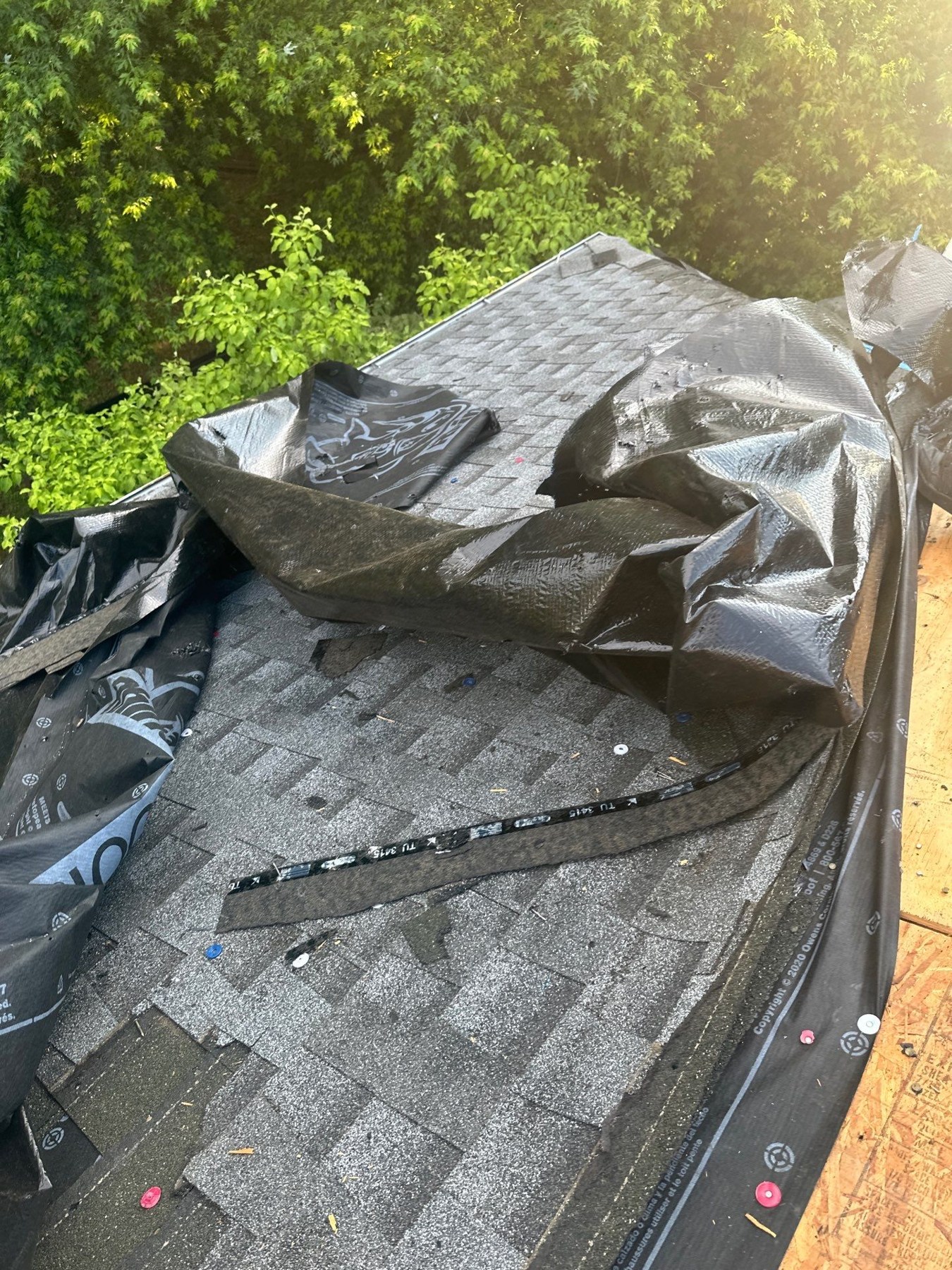
Most mechanically attached underlayments are water-resistant, not waterproof. They should not be left as the only protection for occupied space. Wind can lift laps or expose fasteners, and concentrated water can find penetrations. A contractor should dry in the roof in manageable sections and follow the exposure limits of the exact product.
Where Leak Barrier Fits
Self-adhered leak barrier is different from field underlayment. It is commonly used in valleys, at eaves where required, and around vulnerable penetrations. The roof system may include both: leak barrier at high-risk details and felt or synthetic across the remaining deck.
Which Is Better for Georgia?
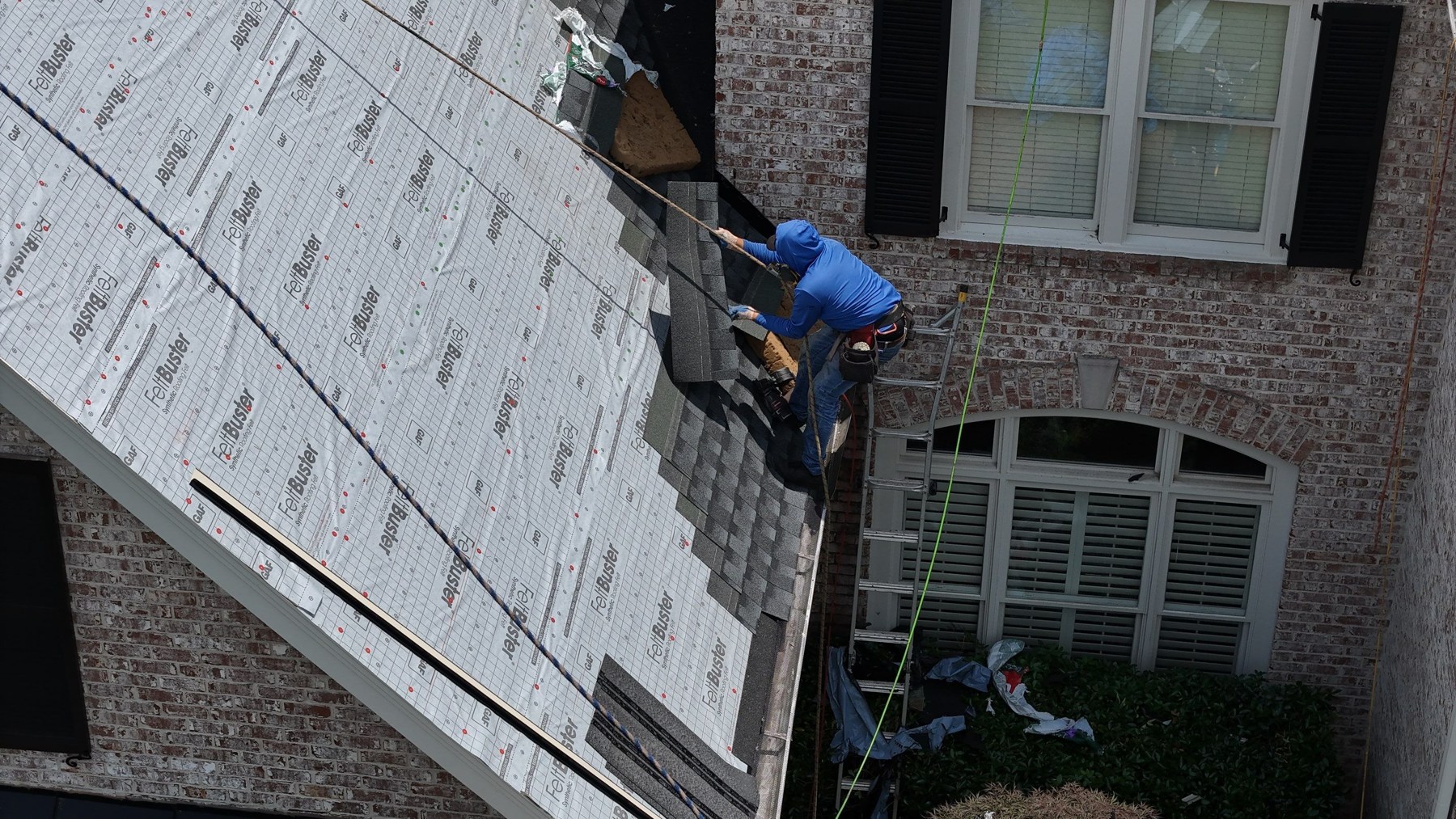
For most architectural-shingle replacements in Sugar Hill, Suwanee, Duluth and Metro Atlanta, a quality synthetic underlayment offers useful tear strength and clean installation during fast-changing summer weather. Felt can still be appropriate when it is compatible with the covering, code and manufacturer system. The brand name matters less than correct overlap, fastening, dry decking and prompt covering.
Low-slope shingle areas need special treatment. The current IRC calls for enhanced underlayment between 2:12 and 4:12; roofs below the product's minimum slope need a different covering. Never solve a slope problem by adding a random extra layer.
Questions to Ask on a Roof Quote
- What exact underlayment product and evaluation report will be used?
- Is it compatible with the selected shingles and warranty?
- Where will self-adhered leak barrier be installed?
- How will valleys, walls, penetrations and drip edge be layered?
- How will exposed work be protected if weather changes?
Underlayment cannot rescue soft decking. The wood must first be sound, dry and properly fastened; then every layer above it can do its job.
Not Sure What Your Roof Needs?
Get a free, photo-documented inspection from a local GAF Master Elite contractor serving Sugar Hill, Suwanee, Duluth and Metro Atlanta. DOM Roofing & Restoration is also a GAF President’s Club Award Winner.
Schedule a Free Roof Inspection(678) 766-9646Frequently Asked Questions
What is roof underlayment?
It is a secondary water-shedding layer installed between the roof deck and the primary covering such as asphalt shingles.
Is synthetic underlayment better than felt?
Synthetic is generally lighter, stronger and more tear-resistant. Felt remains a valid option when code, product instructions and roof conditions allow it.
Is synthetic underlayment waterproof?
Most mechanically attached synthetic products are water-resistant, not waterproof, and should not be treated as a finished roof.
Do I need ice and water shield in Georgia?
Self-adhered leak barrier may be required or recommended at specific details depending on code, manufacturer instructions, slope and project conditions.
Can new underlayment go over wet decking?
No. Decking should be sound and dry before underlayment and shingles are installed.
Costs and service-life ranges are general 2026 planning guidance for Metro Atlanta and North Georgia. Actual conditions, local requirements, product instructions and insurance policy terms control your project.