How to File a Roof Insurance Claim in Georgia
To file a roof insurance claim in Georgia, first protect people and property, document the condition, review your policy, and contact your insurance company through its official claim channel. Keep copies of every photograph, receipt, estimate, email, and letter. Your insurer—not the roofing contractor—decides whether the loss is covered and what payment is available.
This guide explains the practical steps a homeowner can take while keeping the roles clear. DOM Roofing & Restoration can inspect the roof and prepare construction documentation, but we do not promise claim approval, interpret coverage as an insurer, or guarantee a settlement amount.
Video: a homeowner describes how our team stayed patient and organized through their insurance claim and roof replacement. Your insurance company decides coverage and payment.
Step 1: Address Safety and Prevent Additional Damage
Do not climb onto a wet, steep, damaged, or structurally uncertain roof. Keep people away from fallen power lines, unstable trees, sagging ceilings, and active water near electrical fixtures. If a temporary tarp or emergency measure is needed, photograph the affected area beforehand when it is safe to do so.
The Georgia Office of the Commissioner of Insurance and Safety Fire advises homeowners to protect property from additional damage, retain receipts, and avoid permanent repairs before the insurance company has had an opportunity to inspect.
Step 2: Read the Policy and Contact the Insurer
Find the declarations page, deductible information, endorsements, exclusions, and the insurer’s claim phone number or online portal. Notify the company promptly and ask:
- What information is required to open the claim?
- Will an adjuster inspect the roof?
- Does a separate wind or hail deductible apply?
- What temporary work is permitted before inspection?
- What records should be retained?
- What policy deadline or duty applies to this loss?
There is no safe universal filing deadline for every Georgia homeowners policy. The controlling requirements are in the individual contract and applicable law, so confirm them with the insurer or an authorized insurance professional.
Step 3: Create a Damage Record
Documentation should show what was observed, where it was found, and when it was recorded. Useful items include:
- Ground-level and safely obtained roof photographs;
- Interior water stains, wet insulation, or damaged finishes;
- Dates and descriptions of the weather event or discovery;
- Temporary-protection invoices and receipts;
- Prior roof invoices, warranties, and maintenance records;
- A contractor’s measurements, photographs, and proposed repair scope.
A contractor can describe visible conditions such as missing shingles, creases, impact marks, damaged flashing, punctures, or exposed decking. Those observations do not by themselves establish insurance coverage or the date of loss.
Step 4: Understand the Roofing Inspection
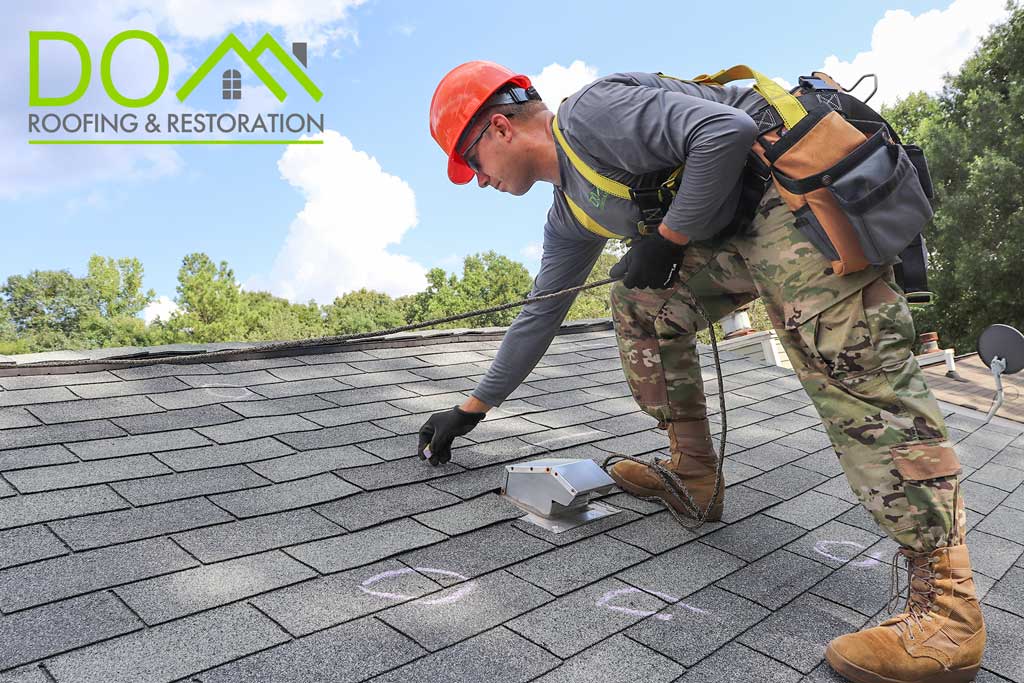
A professional roof inspection can help distinguish a localized repair from a broader construction issue. The inspector should document the roof system, adjacent components, interior evidence when accessible, and any immediate protection needs.
Ask for clear photographs and a written explanation. Avoid anyone who promises a “free roof,” guarantees approval, offers to waive a deductible, or tells you what your policy covers without reviewing the actual contract and having the appropriate authority.
Step 5: Prepare for the Insurance Adjuster
The adjuster investigates the loss for the insurance company. Have the claim number, damage photographs, temporary-repair receipts, and contractor estimate available. A roofer may attend to identify construction components and answer questions about the repair scope.
Ask for important decisions and explanations in writing. Record the adjuster’s name, inspection date, contact information, and the documents provided. Do not assume that a contractor’s estimate and an insurance estimate will use the same format or include the same items.
Step 6: Review the Coverage Decision and Estimate
When the insurer responds, compare the covered scope with the work a contractor says is needed. Questions may involve measurements, material specifications, flashing, ventilation, decking, permits, code-related work, or concealed conditions. Ask the insurer how it wants additional construction information submitted.
A contractor can provide supporting measurements and estimates. Only the insurer can approve additional payment. If part of the decision is unclear, request the applicable policy language and an itemized explanation.
ACV, RCV, Depreciation, and Deductibles
These terms affect how a covered loss may be valued, but their application depends on the policy:
- Actual cash value (ACV) commonly accounts for depreciation.
- Replacement cost value (RCV) may provide for recoverable depreciation after eligible work is completed and documented.
- Deductible is the policyholder’s responsibility under the policy and can be a fixed amount or percentage.
- Coverage limits and endorsements may restrict payment for older roofs, cosmetic damage, matching, wind, or hail.
Ask the insurance company or agent to explain the specific calculation. Do not rely on an online payout range or another homeowner’s claim.
Temporary Repairs vs. Permanent Repairs
Temporary protection is intended to limit further damage. Examples may include tarping an opening or stopping water from entering an exposed area. Permanent repair changes or replaces the roof assembly. Confirm the insurer’s requirements before permanent work begins and keep damaged material when requested for inspection.
For an urgent opening or active leak, see our emergency roof tarping and repair service.
What If the Claim Is Denied?
A denial is not something a roofer can overturn. Ask the insurer for a written explanation and the specific policy provisions involved. Review whether the disagreement concerns coverage, cause, timing, repair scope, documentation, depreciation, or the deductible.
If you cannot resolve the issue directly, Georgia OCI’s Consumer Services Division may be able to assist. Its official consumer insurance complaint page lists the records required and the complaint process. For legal advice or policyholder representation, consult an appropriately licensed professional.
Contractor, Adjuster, Agent, and Public Adjuster Roles
- Roofing contractor: inspects physical conditions and proposes or performs construction work.
- Insurance company adjuster: investigates and evaluates the claim for the insurer.
- Insurance agent: explains insurance products and may help with policy questions within the agent’s authority.
- Licensed public adjuster: may represent a policyholder in the claim for a fee, subject to Georgia licensing requirements.
Verify the license and engagement terms of anyone offering insurance representation. DOM Roofing acts as the roofing contractor, not as the insurer or the homeowner’s legal representative.
Georgia Roof Insurance Claim Checklist
- Prioritize safety and temporary protection.
- Review the policy and contact the insurer promptly.
- Record the claim number and every communication.
- Photograph visible exterior and interior conditions.
- Retain receipts, damaged items, estimates, and prior roof records.
- Ask for written coverage and settlement explanations.
- Compare the insurance scope with the construction scope.
- Confirm responsibility for the deductible and uncovered work.
- Use Georgia OCI resources if a dispute cannot be resolved.
Frequently Asked Questions
How long do I have to file a roof insurance claim in Georgia?
The deadline and notice requirements depend on the policy and circumstances. Contact the insurer promptly and ask for the applicable provision in writing.
Will insurance pay for a complete roof replacement?
It depends on the covered cause, damage extent, repairability, policy terms, deductible, exclusions, and valuation method. No contractor can guarantee replacement coverage.
Can I choose my own roofing contractor?
Ask the insurer about any policy requirements. When comparing contractors, review licensing or registration requirements, insurance, references, scope details, warranties, and payment terms.
Can a roofing contractor negotiate my insurance claim?
A contractor can explain roofing measurements, materials, and repair requirements. Policy interpretation or claim representation may require an insurance or public-adjuster license. DOM Roofing limits its role to roofing inspection, documentation, estimating, and construction.
Does filing a claim guarantee payment?
No. The insurer evaluates the claim under the policy.
Get a Georgia Roof Inspection and Repair Scope
DOM Roofing & Restoration serves Metro Atlanta from offices in Sugar Hill and Suwanee. For roof photographs, an inspection, or a construction estimate, call (678) 766-9646 or request an appointment. We will explain the roof condition clearly without promising an insurance outcome.