Vent Pipe on Roof: What It Is, How It Works & Common Problems (2026 Guide)
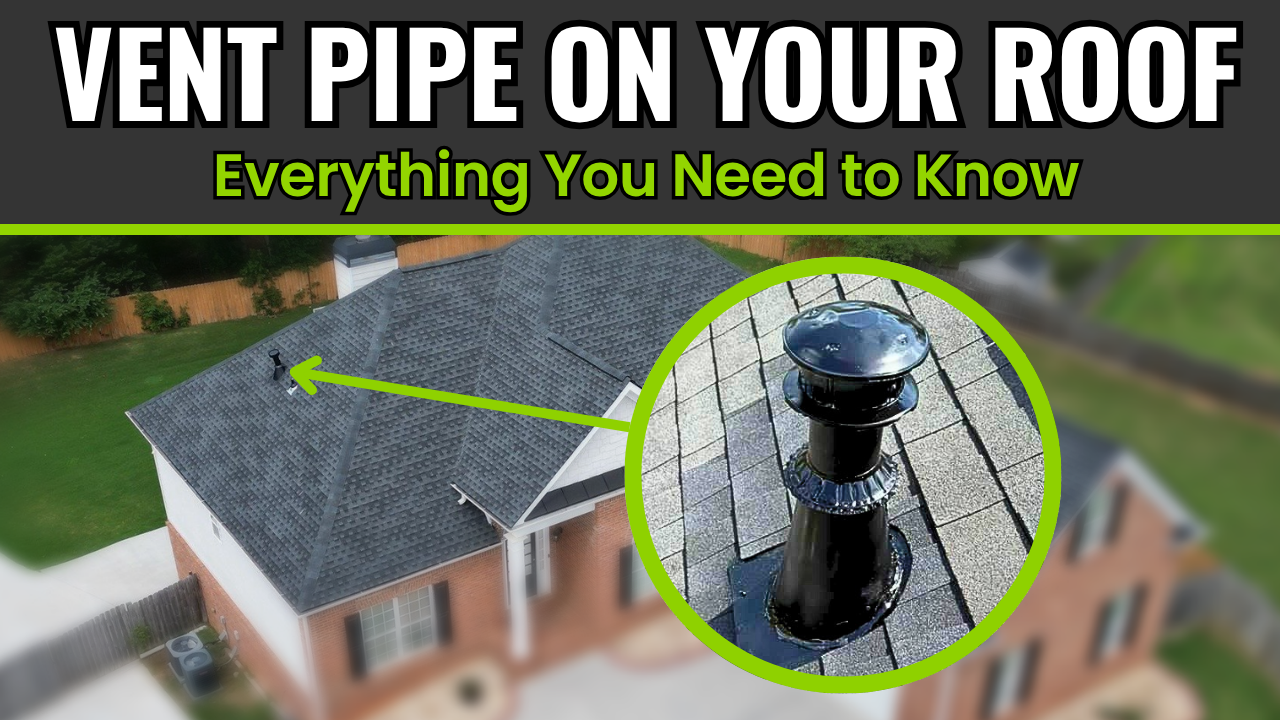
The pipe projecting above the roof may be a plumbing vent stack. Its collar and flashing help seal the roof penetration. If you see signs of a leak near it, have the entry point and surrounding components inspected.
At Dom Roofing & Restoration, based in Sugar Hill, GA, we inspect leaks around roof vent penetrations across Metro Atlanta. A damaged pipe boot or flashing is one possible cause, but pipe defects, joints and nearby roof details should also be checked before deciding on a repair.
Why inspection matters: water can travel through the roof assembly before a ceiling stain becomes visible. Trace the entry point and inspect surrounding materials to understand the extent of the problem.
Video: how we replace a pipe boot the right way, and the shortcuts we see on other roofs that lead to leaks.
What Is the Vent Pipe on Your Roof?
Your home's drain-waste-vent (DWV) system moves waste water out and keeps air pressure stable so drains flow properly. The vertical pipe that runs through your walls and exits the roof is the vent stack — the open top of that system.
Without it, every flush would pull air through the water in your drain traps, breaking the seal that keeps sewer gases inside the pipes. You'd hear gurgling drains, notice slow-draining fixtures, and eventually smell sewer gas inside. The vent pipe must always stay permanently open.
Pipe size, material and roof location vary with the plumbing system. The flashing and collar around the penetration must be compatible with the pipe and integrated with the roof covering.

Why the Vent Pipe Area Leaks
Leaks near a roof vent can originate at the boot collar, flashing, fasteners, the pipe itself or nearby roof details. Two common boot-related problems are:
1. Cracked Rubber Sleeve
The rubber degrades from UV exposure and Georgia's extreme summer heat. A boot that starts flexible and tight becomes brittle and cracked — usually within 8–12 years. Once cracked, every rainstorm pushes water right through the gap between pipe and sleeve, straight into your attic below.
2. Exposed Nail Heads Rusting Out
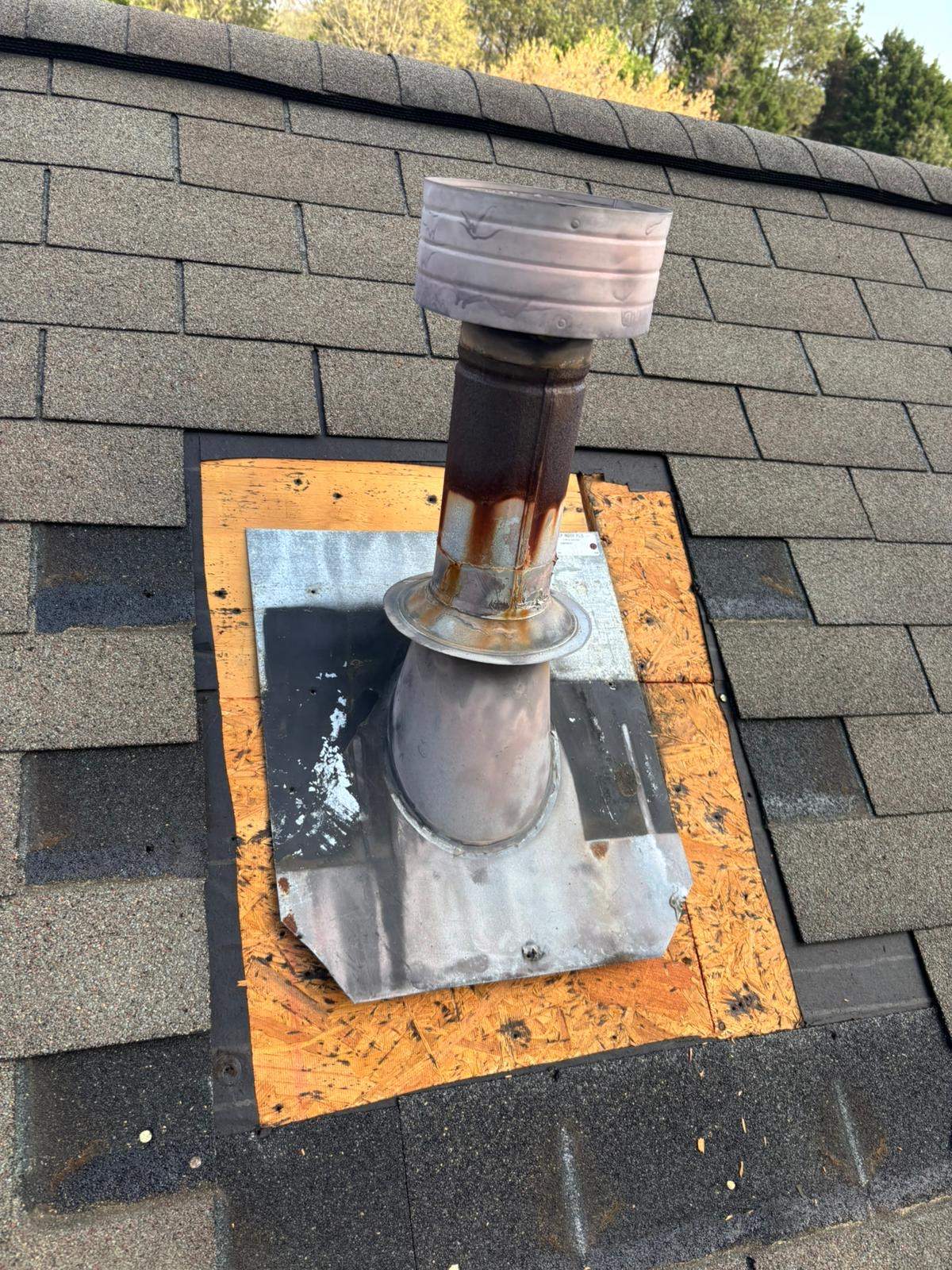
This is the more common failure — caused entirely by bad installation. Most roofers drive nails through the metal flashing base and leave the heads fully exposed. Georgia's humidity and heat cycles cause those nails to slowly back out. Each hole becomes a direct water entry point that grows larger as rust sets in. We regularly see this fail on roofs that are only 2–3 years old.
Red flag on your roof: exposed, corroded or poorly sealed fasteners around a vent penetration deserve inspection. Their placement and sealing should follow the flashing manufacturer's instructions; an exposed head alone does not prove an active leak or a fixed failure date.
Warning Signs Your Vent Pipe Boot Is Failing
Water from a failed boot travels along rafters before it drips — sometimes 10–15 feet — so you may not connect the ceiling stain near your hallway with the vent pipe above the bathroom at all. Watch for:
- Water stains on the ceiling near bathrooms, hallways, or upstairs rooms after heavy Atlanta rain
- Mold or musty smell in the attic — often the first sign of a slow ongoing leak long before you see dripping inside
- Rust streaks on shingles around the pipe — nails are corroding and the seal is already compromised
- Cracked or brittle rubber visible at the base of the pipe
- Exposed nail heads on the metal flashing around the boot
- Roof older than 8–10 years with no pipe boot inspection — Georgia heat degrades rubber on a predictable schedule
Vent Pipe Leaking vs. Vent Pipe Clogged — Know the Difference
These are two completely different problems that homeowners often confuse. A leaking vent pipe is a roofing problem — water getting into your attic through a failed boot. A clogged vent pipe is a plumbing problem — drain function affected inside your home.
- Gurgling sounds from drains or toilet
- Slow-draining sinks, tubs, or toilets
- Sewer smell inside the house
- Water backing up in fixtures
- No ceiling stains, no attic moisture
- Ceiling stains after heavy rain
- Mold or musty smell in the attic
- Rust streaks on shingles near the pipe
- Cracked rubber or exposed nails visible
- No drain problems, no sewer smell
Should a Roof Vent Pipe Be Covered?
The short answer: no — never permanently block a plumbing vent pipe.
The vent pipe must stay open to push sewer gases out and keep air pressure balanced in your drain system. Block it and you'll have gurgling drains, slow-flushing toilets, and sewer smell coming back through your fixtures.
Use only a vent termination or protective screen that suits the plumbing system and applicable requirements, without obstructing airflow. A qualified plumber can advise before a cap or screen is added.
How High Should a Vent Pipe Be Above the Roof?
Vent termination height depends on the applicable plumbing code, roof use, nearby openings and local conditions. Have the required height verified for the specific installation rather than assuming one dimension fits every roof.
If your vent pipe barely clears the shingles, it may have been cut short during a previous roof replacement. A pipe that's too short can get blocked and cause drain problems inside. We check pipe height and condition at every free inspection.
How Dom Roofing Fixes a Leaking Vent Pipe — 6 Steps
When replacing a pipe boot, we assess the surrounding shingles and decking and follow the selected flashing system's installation instructions. The scope depends on the roof condition and product.
We remove the shingles needed to expose and replace the failed flashing, inspect the decking and integrate the new boot with the roof covering according to its instructions. The required scope depends on the existing roof and product.
Old boot and all flashing come off completely. We inspect the decking for soft spots, rot, or hidden water damage before anything new goes down.
Self-adhering waterproof membrane on the clean decking around the pipe. The step most roofers skip. Even if water gets past the boot, the IWS stops it from reaching the deck. We install it on every single replacement. Learn more about roof waterproofing.
Flashing base correctly seated — uphill edge under shingles, zero nail heads exposed. Rubber sleeve fits tight around the pipe with no gaps.
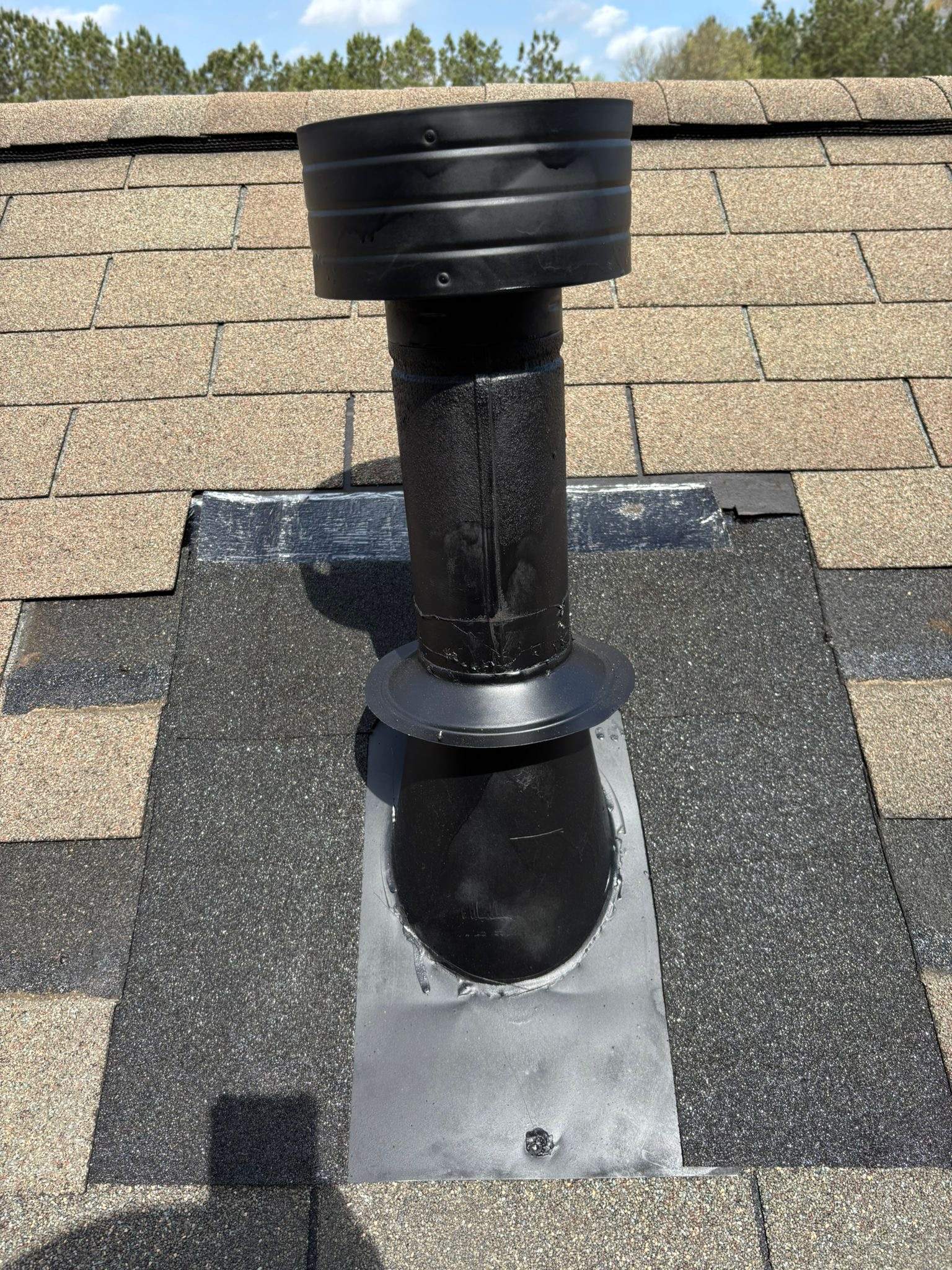
Use compatible sealant only where the flashing manufacturer specifies it. Maintain the intended shingle laps and drainage path rather than sealing every edge indiscriminately.
Use a manufacturer-approved finish on metal only where appropriate. Do not paint the flexible collar or plastic base, or apply petroleum-based products, unless that specific manufacturer explicitly permits it.
How Much Does It Cost in Atlanta?
A proper pipe boot replacement with Dom Roofing starts at $300 per boot — full 6-step process, 5-year no-leak warranty included. Not a patch. Not just a rubber swap.
One emergency call for water-damaged insulation, mold remediation, and drywall replacement typically runs $1,500–$4,000+. A $300 proper job prevents all of that. If damage is already extensive, you may need a full roof replacement.
Most Atlanta homes have 2–4 pipe boots on the roof. If your roof is over 8 years old and the boots have never been inspected, it's worth having all of them checked in a single visit. We replace only what needs replacing — no upselling. Schedule your free inspection here.
Think Your Boot Is Failing?
Free inspection across Metro Atlanta. We quote on the spot — 5-year warranty on every job.
Frequently Asked Questions
Serving All of Metro Atlanta & North Georgia
Dom Roofing & Restoration provides vent pipe boot replacement and roof leak repair across Gwinnett County, Forsyth County, Hall County, and greater Metro Atlanta.


Sugar Hill, GA 30518