Roof Pipe Boot: Why It Fails & How to Fix It Right
That water stain on your ceiling after a rainstorm? The slow drip near the bathroom? In most Atlanta homes, the culprit isn't a missing shingle or storm damage — it's a failed pipe boot. And most homeowners don't find out until the damage is already spreading through their attic or walls.
At Dom Roofing & Restoration, based in Sugar Hill, GA, we replace pipe boots every week across Metro Atlanta and Gwinnett County. We see the same story constantly: another roofing company installed the boot with exposed nails, the nails rusted out within a few years, and now the homeowner has interior water damage that was completely avoidable.
Why inspection matters: damaged collars, unsuitable fasteners and poor flashing details can allow water into a roof. The timing and severity vary, and a ceiling stain can appear away from the entry point. Have the cause checked before choosing a repair.
What Is a Roof Pipe Boot?
A roof pipe boot — also called a plumbing vent boot, pipe flashing boot, or pipe collar — is the rubber and metal seal that wraps around your plumbing vent pipe where it exits through the roof surface. Every home has at least one, most have two or three.
The boot sits on a metal flashing base that tucks under the shingles above and rests on top of the shingles below. The rubber sleeve creates a watertight seal around the pipe. When it fails, water follows the pipe straight into your attic — traveling along rafters sometimes 10–15 feet before you ever see it dripping inside.
Pipe boot service life varies by material, exposure and installation. Regular condition checks help identify cracking, separation, fastener problems and other defects before deciding what repair is needed.

Properly installed pipe boot — clean flashing, no exposed nails, sealed edges
Warning Signs Your Pipe Boot Is Failing
The tricky part about pipe boot failures is that the water entry point on the roof rarely aligns with where you see damage inside. Water travels along rafters and decking before it drips — sometimes 10–15 feet from the actual breach. If you notice any of the following, schedule a free roof inspection right away:
- Water stains on the ceiling near bathrooms, hallways, or upstairs rooms — especially after heavy Atlanta rainstorms
- Mold or musty smell in the attic — a slow ongoing leak from a cracked boot often shows up as mold on rafters long before you see dripping inside
- Rust streaks on the shingles around the pipe — a clear sign nails are corroding and the seal is compromised
- Cracked or brittle rubber visible around the base of the vent pipe
- Exposed or popped fasteners around the flashing deserve inspection for corrosion, movement and unsuitable placement or sealing.
- Roof older than 8–10 years with no pipe boot inspection — rubber boots degrade on a predictable schedule in Georgia's heat
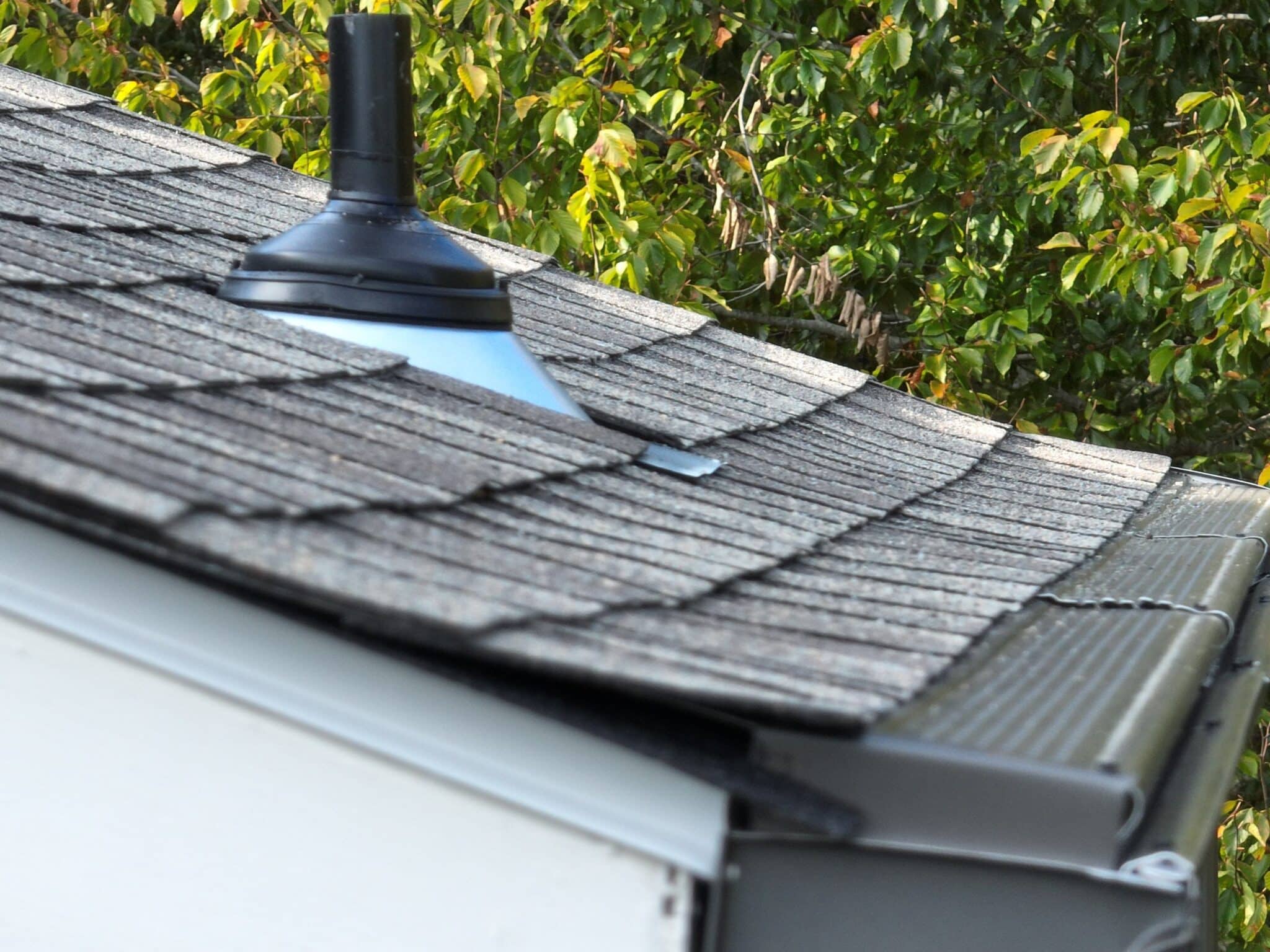
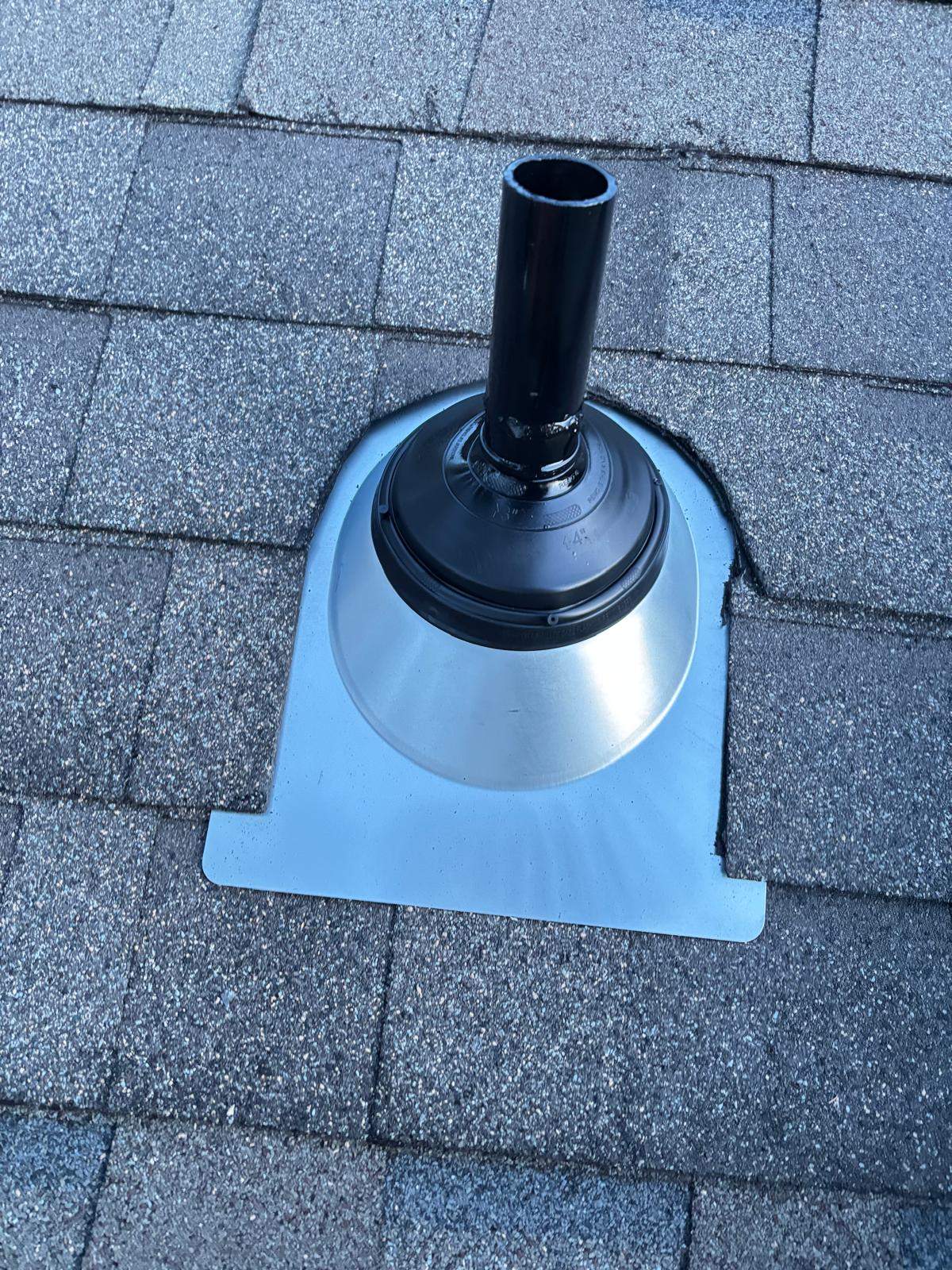
Two examples of proper pipe boot installations — side view and top view showing clean flashing and no exposed nail heads
Why Most Pipe Boots Fail — The Exposed Nail Problem
Look at the pipe boots on most Atlanta roofs and you'll see exposed nail heads sitting right at the flashing edge. Those nails are a ticking clock. Here's exactly what happens over time in Georgia's climate:
- Nails driven into the flashing with no gasket or sealant — bare nail through bare metal, fully exposed to weather
- Georgia's heat cycles expand and contract the metal constantly — summer temperatures hit 95°F+ regularly, causing nails to gradually back out over years
- Nails rust and the hole around each one grows larger as the metal corrodes
- Poorly placed or inadequately sealed fasteners can admit water. Inspect their condition and compare the installation with the flashing manufacturer's requirements.
This is why we see homeowners who just had their roof replaced 3–4 years ago already dealing with roof leak repairs caused by nothing more than a poorly installed pipe boot.
| What We're Comparing | ❌ The Wrong Way | ✅ The Dom Roofing Way |
|---|---|---|
| Fasteners | Poorly placed or unsealed fasteners can increase leak risk | Fasteners placed and sealed according to product instructions |
| Waterproofing layer | None — boot installed on old shingles or bare decking | Ice & Water Shield membrane on clean decking |
| Decking preparation | Old shingles left in place, decking never inspected | Old shingles removed, decking cleaned and inspected |
| Sealing | Missing or incompatible sealant where the product requires it | Compatible sealant at manufacturer-specified locations |
| Corrosion protection | Finish not suited to the flashing material | Manufacturer-approved metal finish where appropriate |
| Warranty | Varies by contractor and written terms | 5-Year No-Leak Warranty |
Watch the Full Pipe Boot Replacement — Real Job in Atlanta
See exactly how Dom Roofing replaces pipe boots on a real Atlanta home — step by step, from removing the old failed boot all the way to the finished installation.
▶ Real Job · Dom Roofing & Restoration · Metro Atlanta
Our Pipe Boot Replacement Process — 6 Steps, Done Right
When Dom Roofing replaces a pipe boot, we don't just swap the rubber. Every replacement follows a full 6-step process built to last — not just to pass a quick look from the ground.
We remove the shingles needed to expose the failed flashing and inspect the decking. The new boot is then integrated with the roof covering according to its instructions and the condition of the existing assembly.
The old boot and flashing come off completely. We inspect the decking underneath for soft spots, rot, or water damage. If the decking is compromised, we address it before the new boot goes in — not after.
This is the step most roofers skip to save 10 minutes. We apply a self-adhering Ice & Water Shield membrane directly on the clean decking around the pipe. Even if water somehow gets past the boot, the IWS stops it from reaching the decking. Learn more about how proper roof ventilation and waterproofing protects your home long-term.
We install a high-quality pipe boot with the metal flashing base correctly seated — uphill edge under the shingles, no exposed nail heads. The rubber sleeve fits tight around the pipe with zero gaps.
Seal only the locations required by the selected flashing system using compatible materials. Proper shingle overlap and drainage must remain intact; a continuous bead around every edge is not a universal installation method.
Where the manufacturer permits a coating, use a compatible finish on the appropriate metal surfaces. Keep paint and incompatible sealants off flexible collars and plastic bases, following the selected product's instructions.

Step-by-step: removing the old failed boot → exposing clean decking → installing the new boot cover

Dom Roofing crew on a real job — caulking, fitting the new boot, and finishing the installation
Finished Results — Clean Installs Across Metro Atlanta
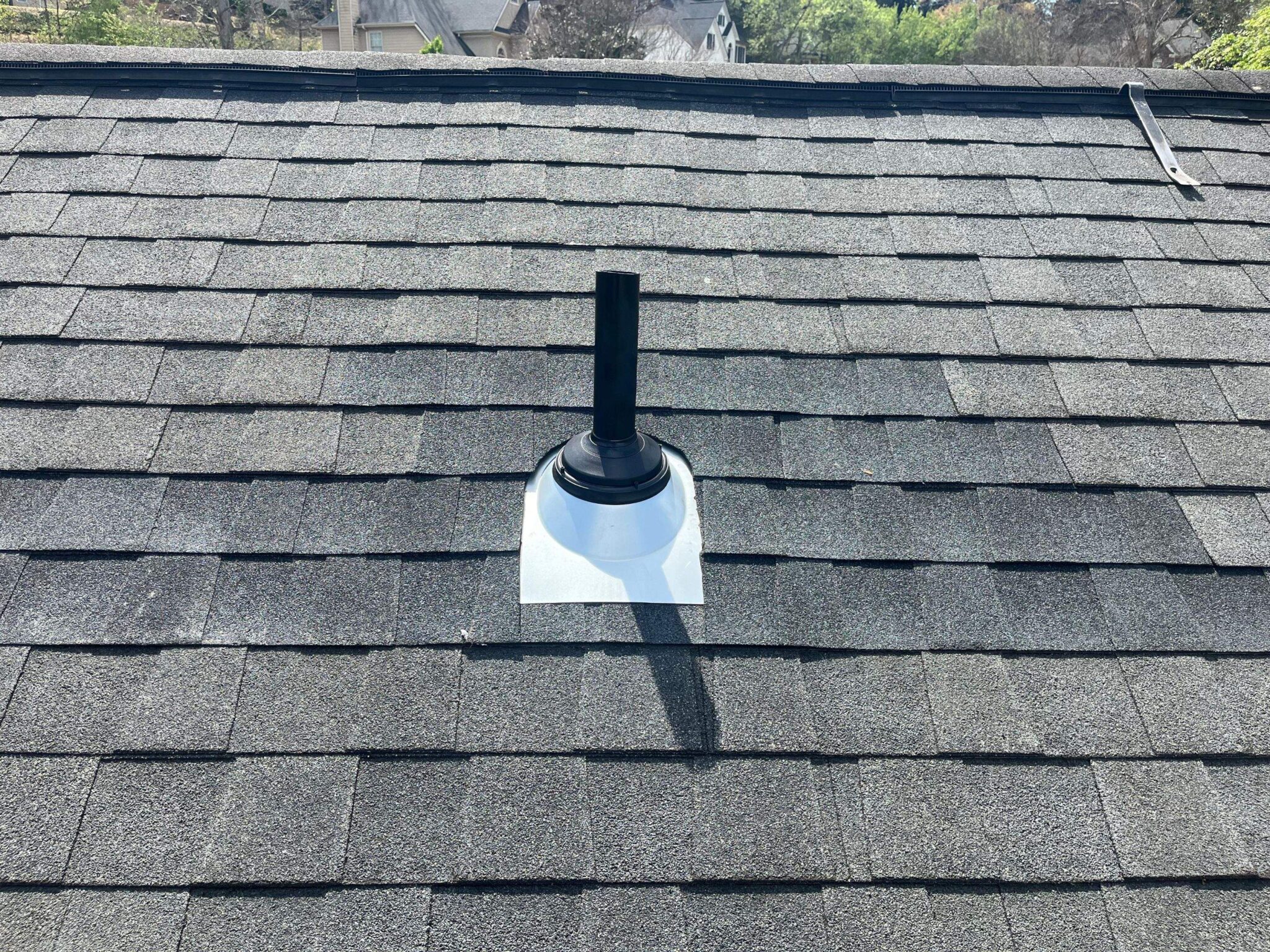


Finished installation: flashing integrated with the roof covering, with product-compatible sealing and finish details. Ask for the written 5-year no-leak warranty terms.
How Much Does Pipe Boot Replacement Cost in Atlanta?
A professional pipe boot replacement with Dom Roofing starts at $300 per boot. That includes the full 6-step process — not a patch, not just swapping rubber — with our 5-year no-leak warranty on every job.
Compare that to what happens when a cheap boot fails 2 years later: emergency repair call, water-soaked insulation, mold remediation in the attic, and possible drywall replacement inside. A proper replacement once always costs less than a cheap job twice plus interior damage. If the damage is already extensive, you may also need a full roof replacement — another reason to catch pipe boot failures early.
Most homes have 2–4 pipe boots on the roof. If your roof is over 8 years old and the boots have never been inspected, it's worth having all of them checked in a single visit. We replace only what needs replacing — no upselling, no unnecessary work. Schedule your free inspection here.
Frequently Asked Questions About Pipe Boot Replacement
Why Atlanta Homeowners Choose Dom Roofing & Restoration for Pipe Boot Replacement
Dom Roofing & Restoration offers a 5-year no-leak warranty on eligible pipe boot replacement work. Ask for the written coverage, exclusions and maintenance requirements with your estimate.
Installation quality matters regardless of who built or last repaired the roof. During inspection, check the collar, flashing laps, fastener placement, decking and any underlayment required for the selected system. A job-specific assessment is more useful than assumptions based on the installer's category.
Coatings are product-specific. An approved metal finish may provide corrosion protection, but painting a flexible collar is not a method for keeping rubber flexible. Follow the flashing manufacturer's instructions for finishes and sealants.
A damaged boot or flashing can cause a leak near a plumbing vent. The water entry point should be traced during an inspection because pipe defects, nearby roof details and other sources can produce similar indoor symptoms.
Serving All of Metro Atlanta & North Georgia
Dom Roofing & Restoration provides pipe boot replacement and roof leak repair across Gwinnett County, Forsyth County, Hall County, and the greater Atlanta metro area.

Pipe Boot Replacement & Roof Repair Experts
Sugar Hill, GA 30518