Roof Flashing Guide: Types, Leaks & Repair Cost (2026)
The short answer: Roof flashing is corrosion-resistant metal that directs water away from joints and penetrations. Step flashing protects roof-to-wall intersections; counterflashing covers its upper edge; valley, vent and chimney flashing protect other high-flow areas. Leaks often come from installation errors, movement or failed sealant—not from the open shingle field.
Shingles shed water on broad roof planes. Flashing handles the places where those planes stop, turn or meet something else. On Georgia homes, that means chimneys, walls, valleys, skylights, plumbing vents and dormers. These details receive concentrated runoff and wind-driven rain, so small errors can create persistent leaks.
Common Types of Roof Flashing
| Type | Location | Job |
|---|---|---|
| Step flashing | Roof-to-wall and chimney sidewalls | Overlaps each shingle course and redirects water |
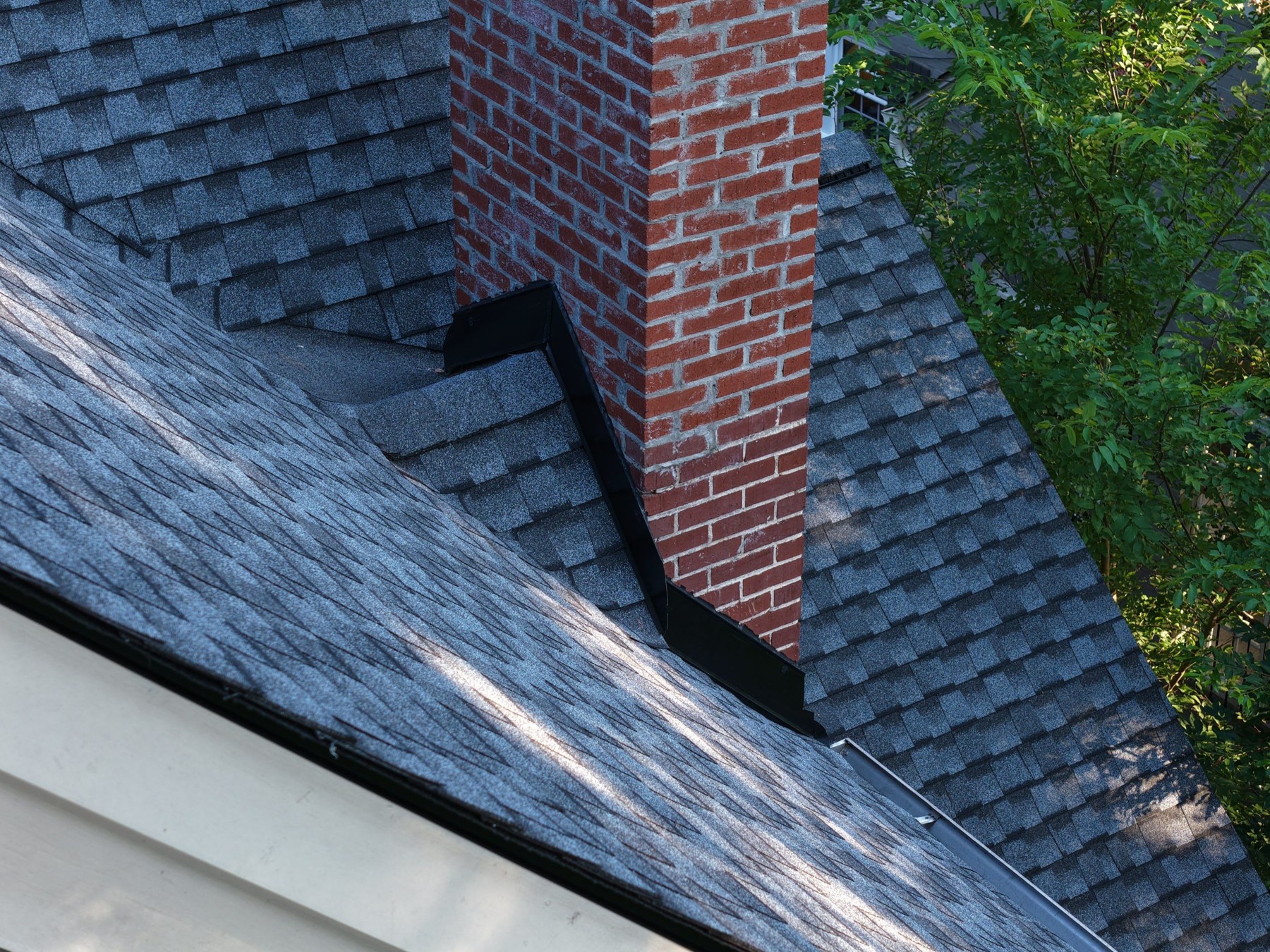
| Counterflashing | Masonry walls and chimneys | Covers the vertical edge of base or step flashing |
| Valley flashing | Where two roof slopes meet | Carries concentrated runoff downhill |
| Apron/headwall flashing | Front of wall or chimney | Bridges the roof and vertical surface |
| Pipe boot | Plumbing vent penetration | Seals around the pipe while shedding water |
| Kick-out flashing | Bottom of roof-to-wall intersection | Diverts water into the gutter instead of behind siding |
Why Flashing Leaks
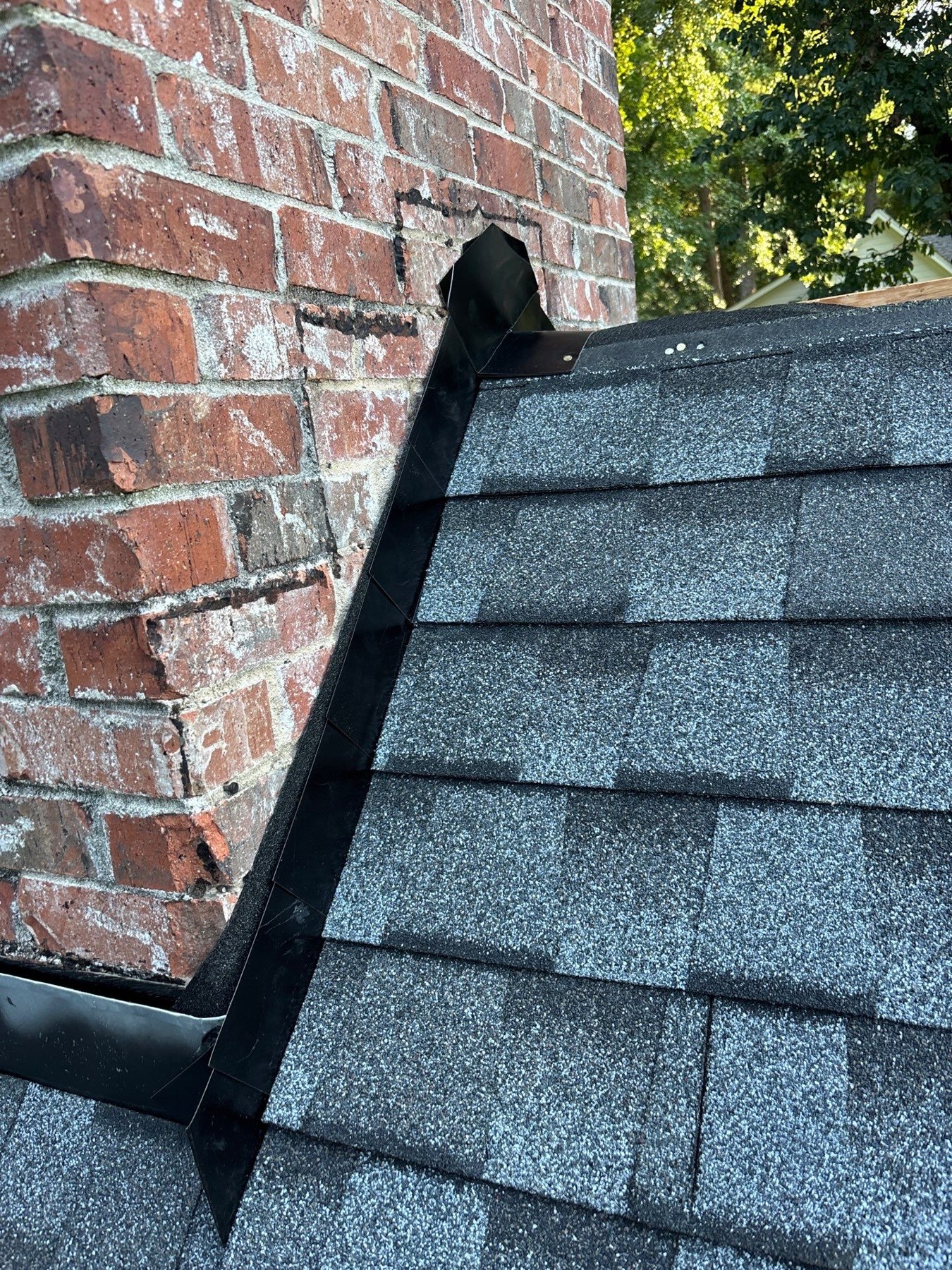
- Step flashing was replaced with one continuous strip.
- Counterflashing was surface-caulked instead of integrated with masonry.
- Nails were placed where runoff can reach them.
- Roof cement became the primary waterproofing layer and cracked.
- Metal corroded or separated as the roof moved through heat cycles.
- Siding was installed too close to the shingles and trapped debris.
A bead of sealant can be a legitimate part of a listed detail, but it should not substitute for layered metal. Durable flashing works by gravity and overlap even after exposed sealant ages.
Roof Flashing Repair Cost in Georgia
| Repair | Typical range |
|---|---|
| Simple vent or small flashing correction | $450–$950 |
| Short sidewall/step-flashing repair | $750–$2,000 |
| Chimney flashing rebuild | $1,200–$3,500+ |
| Complex valley or siding-integrated repair | $1,500–$4,000+ |
Height, pitch, masonry work, siding removal, material matching and damaged decking change the total. See the broader pricing factors in our Georgia roof leak repair cost guide.
Repair, Reuse or Replace?
During a roof replacement, flashing should be inspected after tear-off. Sound metal may be reusable only when the manufacturer, code and project conditions allow it and when it can be integrated correctly with the new system. Bent, corroded, short or cement-covered pieces should be replaced. Chimney counterflashing deserves special attention because reusing it may compromise the new step flashing beneath.
Local Leak Clues
Water stains beside a chimney, at the bottom of a dormer or below a wall intersection point toward flashing, but attic tracing is still important. On brick homes throughout Duluth, Suwanee, Sugar Hill and Johns Creek, missing kick-out flashing can also send water behind siding and create wall rot with no obvious roof stain.
Not Sure What Your Roof Needs?
Get a free, photo-documented inspection from a local GAF Master Elite contractor serving Sugar Hill, Suwanee, Duluth and Metro Atlanta. DOM Roofing & Restoration is also a GAF President’s Club Award Winner.
Schedule a Free Roof Inspection(678) 766-9646Frequently Asked Questions
What is roof flashing?
Roof flashing is shaped metal that directs water away from joints, penetrations and transitions where shingles alone cannot provide a durable detail.
Can roof flashing be repaired without replacing the roof?
Often yes, but the surrounding shingles or siding may need to be removed and reinstalled to integrate new metal correctly.
How much does chimney flashing repair cost?
A typical Georgia planning range is about $1,200–$3,500 or more, depending on roof access, masonry, decking and the amount of roofing disturbed.
Is caulk enough to fix flashing?
Usually not as a permanent repair. Sealant may support a designed detail, but it should not replace correct metal overlap and integration.
What is kick-out flashing?
It is a small diverter at the bottom of a roof-to-wall intersection that sends water into the gutter instead of behind siding.
Costs and service-life ranges are general 2026 planning guidance for Metro Atlanta and North Georgia. Actual conditions, local requirements, product instructions and insurance policy terms control your project.