
Hail Storm Hits Acworth, GA (July 3, 2026): What Homeowners Should Do Now
A severe thunderstorm sat over Acworth on the afternoon of July 3, 2026. The National Weather Service warning called for 60 mph wind gusts and quarter-size hail, and told residents to expect wind damage to roofs, siding, and trees. Photograph what the storm left in your yard, get the roof inspected, and only then call your insurer, with photo proof in hand.
What happened in Acworth on July 3?
At 3:27 PM on July 3, the National Weather Service placed a severe thunderstorm directly over Acworth, moving northwest at 10 mph, with radar indicating 60 mph wind gusts and quarter-size hail. The warning from NWS Peachtree City spelled out the impact: hail damage to vehicles expected, wind damage to roofs, siding, and trees. On the ground it played out that way. Residents described trees down, debris on the roads, traffic lights completely out, and streets shut down around Lake Acworth, Highway 92, and the Acworth Avenue shops. WSB-TV damage reports listed trees down on Mars Hill Road and two large trees down in the 4300 block of Park Street, with downed trees and power lines at Mars Hill Road and Due West. Homeowners photographed hailstones from penny size up.
The same storm cell tracked across the northwest metro, with hail and intense lightning reported in Kennesaw and hail falling as far east as Alpharetta the same day.
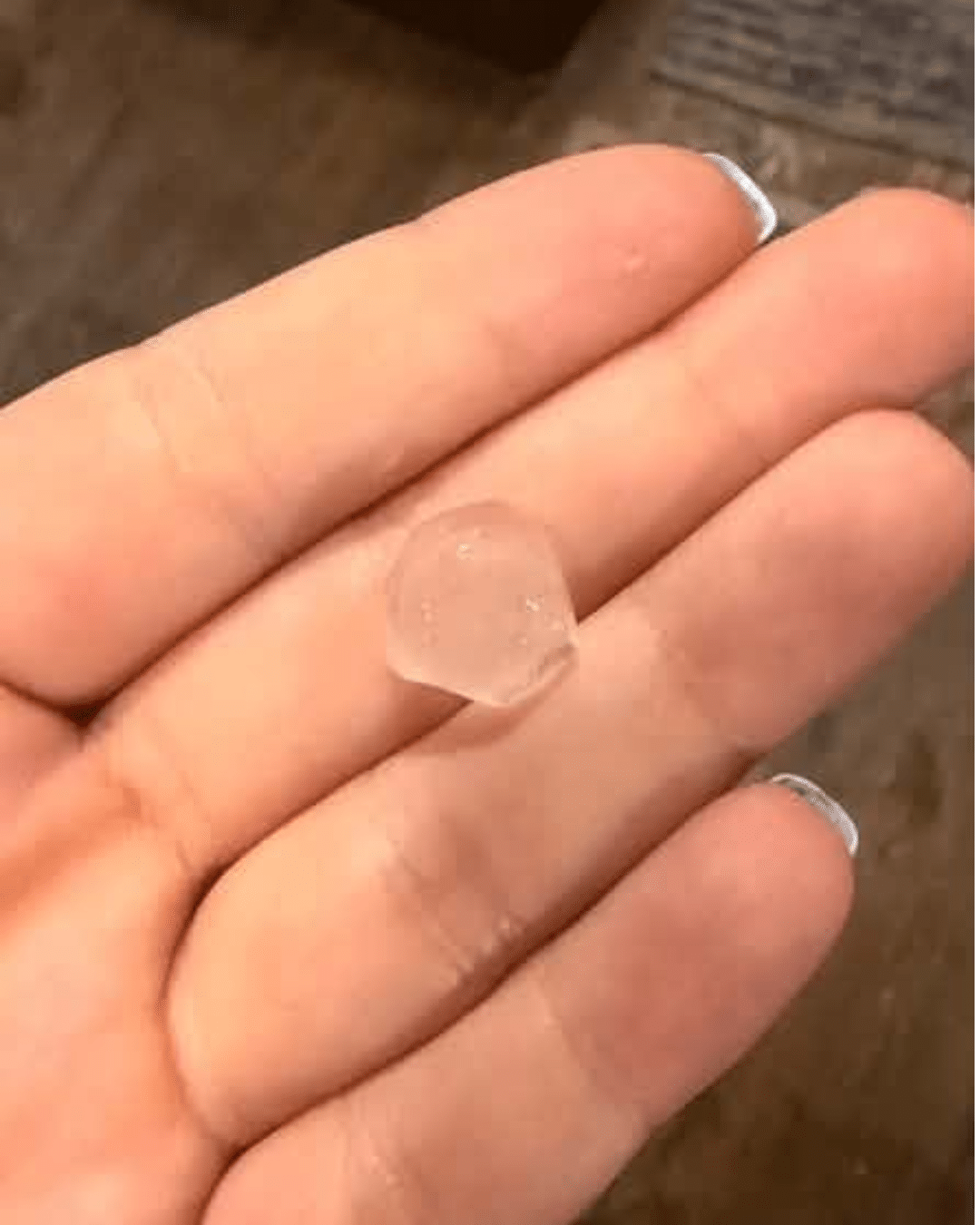
Can quarter-size hail damage a roof?
Yes. The National Weather Service draws its severe line at 1 inch, quarter size, and quarter size is exactly what radar indicated over Acworth. That is the size where asphalt shingle damage starts showing up on inspections. Hail never falls in one uniform size across a swath, so some yards saw penny stones while others took quarters. Three kinds of roofs take it worst:
- Shingles 10 years old or more. UV exposure makes asphalt brittle, so smaller hail bruises the mat and knocks granules loose.
- 3-tab shingles. Thinner, single-layer construction takes impact damage at smaller hail sizes than architectural shingles.
- Soft metals. Gutters, downspouts, roof vents, and flashing dent at 3/4 inch. Adjusters read those dents as proof of impact energy on the whole roof.
In Acworth, hail is only half the story. The 60 mph gusts that snapped trees on Mars Hill Road and Park Street are the same winds that lift shingle tabs, crease them along the nail line, and break the adhesive seal. Wind damage is its own basis for an insurance claim, separate from hail, and it is common after exactly this kind of storm.
The damage you cannot see from the ground
Most storm damage on a roof is invisible from the driveway. On inspections after hail and wind events, our crews document:
- Granule loss that exposes the black asphalt mat, which then bakes and cracks in the Georgia sun
- Creased or lifted tabs that look flat from below but no longer seal
- Bruises in the shingle mat you can feel by hand but not see in photos from the street
- Dented ridge vents, pipe boots, and flashing that start leaking months later
A roof with this kind of damage often will not leak until winter. By then, connecting the leak to the July 3 storm gets harder, and your claim gets weaker. Documentation now is what protects you later.
What Acworth homeowners should do now
- Photograph the storm evidence today. Hailstones next to a coin, tree damage, debris in the yard, dented grill lids or car panels. Phone photos carry timestamps, and adjusters use them.
- Walk your property and look up. Shingles or shingle pieces in the yard, dented gutters and downspouts, torn window screens, and bent AC fins all point to roof impact.
- Be careful with door-knockers. Out-of-state storm crews follow hail maps into neighborhoods like yours within days. Before signing anything, ask for a Georgia address, a license number, and local references, and do not sign an assignment of benefits at the door.
- Get a documented inspection before calling your insurer. When you file, the adjuster asks what the damage is. "I think there might be some" is a weak claim. A slope-by-slope photo report is a strong one.
- Check your policy deadline. Many Georgia homeowner policies require storm claims within 12 months of the date of loss, and some carriers apply shorter windows. July 3, 2026 is now your date of loss. Do not let it age.
Will homeowners insurance cover this storm?
Wind and hail are standard covered perils on most Georgia homeowner policies. If an adjuster confirms storm damage, insurance may cover roof repair or full replacement, and you pay your deductible. Whether a claim gets approved usually comes down to documentation: date-stamped photos of the storm, a professional inspection report, and damage that matches the July 3 event.
We inspect first, for free, and tell you straight whether what we find is worth a claim. If it is not, you will know that too, and you will not burn a claim on a denial.
Free storm inspection in Acworth
Dom Roofing & Restoration is inspecting roofs across the Acworth storm path this week. Drone and rooftop photos of every slope, a written report you keep, and no pressure either way.
Or call us: (678) 766-9646
Acworth storm damage FAQ
Does insurance cover hail damage from this storm?
It can. Radar indicated quarter-size hail and 60 mph gusts over Acworth, and the NWS warning itself said to expect wind damage to roofs. If hail bruised your shingles or wind creased and lifted tabs, that is claimable damage on most policies. An inspection report is what turns "hail fell here" into an approvable claim.
How long do I have to file a storm damage claim?
Check your policy's "duties after loss" section. Many Georgia policies allow 12 months from the date of loss, some allow more, and a few carriers require prompt notice measured in weeks. For this storm, the clock started July 3, 2026.
My roof is not leaking. Do I still need an inspection?
Yes, if you were in the storm path. Granule loss, bruised mats, and broken seals do not leak right away. They shorten the roof's life and turn into leaks months later, after the storm connection is harder to prove.
Should I trust the roofer knocking on my door?
Verify before you sign. Ask for a Georgia business address, license and insurance certificates, and addresses of local jobs you can drive past. Storm-chasing crews leave the state when the season ends, and their warranties leave with them.
What does the free inspection include?
A rooftop walk where the pitch allows it, drone photos of every slope, gutters, vents, and flashing checked for impact marks, and a written photo report. If we find claim-worthy damage, we can also meet your adjuster on site.