Cedar Shake Roofing in Sugar Hill, Suwanee & Buford: The 2026 North Atlanta Guide
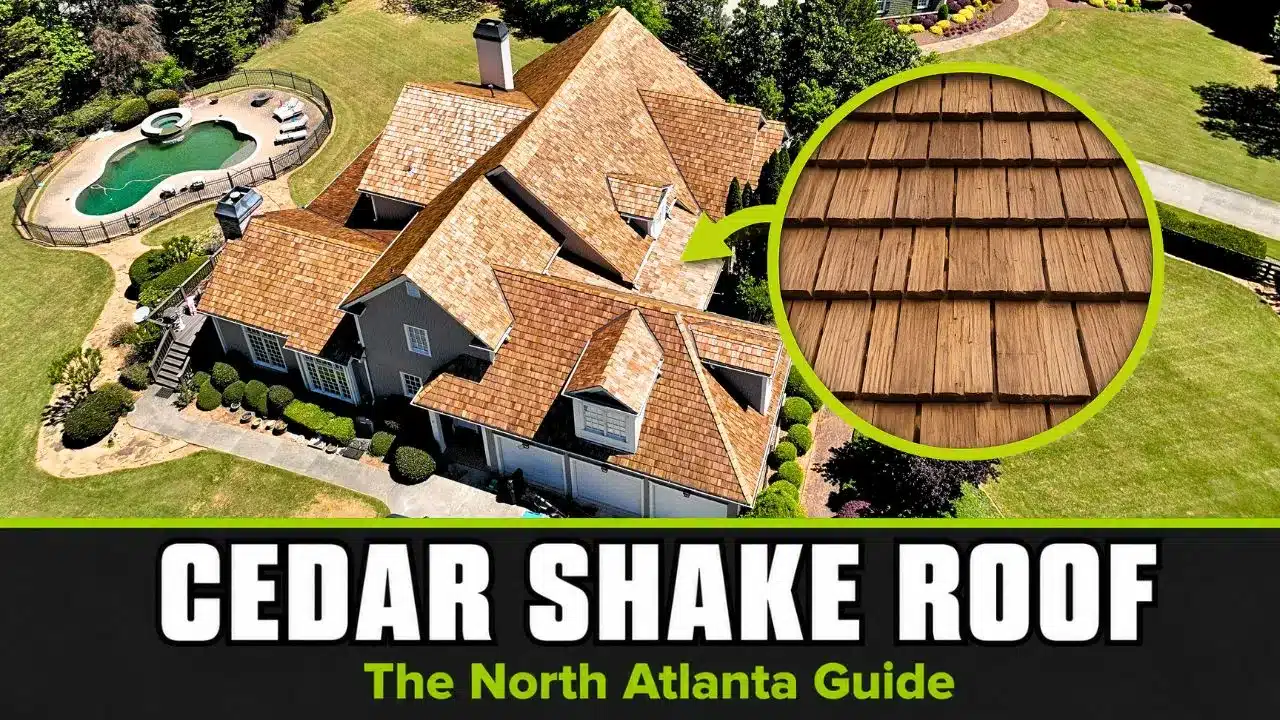
A cedar shake roof is a premium wood roofing system made from split or sawn cedar that delivers unmatched natural beauty, a 30-to-50-year lifespan, and real curb appeal on upscale North Atlanta homes. We install and restore cedar shake roofs across Sugar Hill, Suwanee, Buford, and all of Gwinnett County, and we will be honest with you up front: cedar is the most beautiful roof you can put on a home, but in Georgia's humidity and tree shade it asks more of you than asphalt. This guide covers cost, lifespan, maintenance, real cedar versus synthetic, and exactly what to expect on a North Atlanta home.
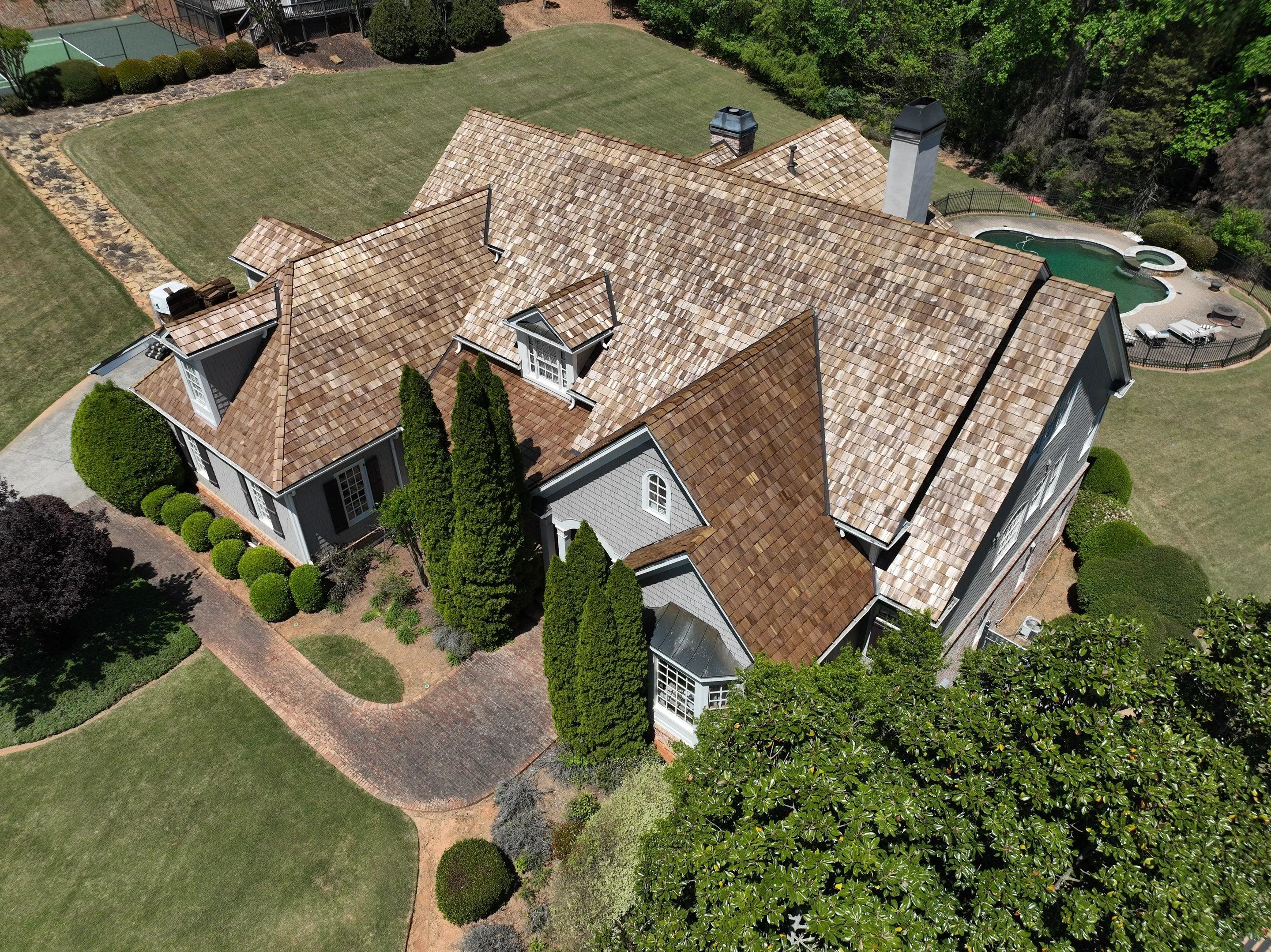
Cedar shake roof at a glance (North Atlanta, 2026 estimates):
- Installed cost: roughly $8–$14 per sq ft, about $700–$1,400 per roofing square.
- Typical 2,000 sq ft roof: about $16,000–$28,000+ (steep, complex rooflines push higher).
- Lifespan: 30–50 years; in humid, tree-shaded Georgia plan on 30–40 years with good maintenance.
- Maintenance: annual inspection, debris removal, soft-wash 1–2x/yr, re-oil every 3–5 years.
- Low-upkeep alternative: synthetic cedar shake — ~50-year life, Class A fire, no rot or moss.
What is a cedar shake roof?
A cedar shake roof — also called a wood shake roof — is a roof covered with overlapping pieces of natural cedar wood, prized for its rich texture, warmth, and the way it ages into a soft silver-gray patina. Most cedar roofing in North Atlanta is Western Red Cedar, with Alaskan Yellow Cedar as a premium, denser option. Cedar is naturally beautiful, lightweight, a good natural insulator that helps in Georgia's summer heat, and surprisingly strong in wind — which matters when storms roll through Gwinnett.
Because cedar is an organic, porous wood, it is also vulnerable to moisture, moss, and rot if it is neglected. That single fact drives almost every decision about cedar roofing in our humid climate, and it is the reason craftsmanship and maintenance matter so much. If you want to understand how roofers measure and price any roof by area, our explainer on what a roofing square is is a helpful starting point.
Hand-split shakes vs. taper-sawn shingles: what is the difference?
The difference is texture and look: hand-split shakes are thick and rustic with deep shadow lines, while taper-sawn shingles are smoother and more uniform for a refined, tailored appearance. Both are "cedar shake" in everyday language, but they create very different curb appeal.
- Hand-split (and resawn) shakes: split along the grain, thick (often 1/2" to 3/4"), bold and textured. The classic mountain-lodge look that suits larger custom homes in Suwanee and Buford.
- Taper-sawn / sawn shingles: sawn on both faces, thinner, smoother, and more uniform — a cleaner, more architectural look that many Sugar Hill homeowners prefer.
- Grades matter: ask for Premium / No. 1 Blue Label — the highest grade, 100% heartwood, clear, and edge-grain for the best durability.
| Type | Look | Texture | Best for |
|---|---|---|---|
| Hand-split shakes | Rustic, dramatic | Thick, uneven, deep shadows | Craftsman, mountain, estate homes |
| Taper-sawn shingles | Refined, tailored | Smooth, uniform | Traditional, transitional, HOA homes |

How much does a cedar shake roof cost in North Atlanta?
A cedar shake roof in North Atlanta typically costs $8–$14 per square foot installed, or roughly $700–$1,400 per roofing square, which puts a typical 2,000 sq ft roof at about $16,000–$28,000 or more. Premium hand-split Western Red Cedar runs about $5–$9 per sq ft for materials alone before labor. Cedar is a luxury product, and the steep, multi-gable rooflines common on custom homes in Suwanee and Buford push the labor side higher because every cut, valley, and ridge is done by hand.
We always quote cedar as a range, never a flat promise, because pitch, complexity, the grade you choose, and fire-retardant treatment all move the number. For broader context on regional pricing, see our roof replacement cost guide for North Atlanta. And true to how we work: we only recommend what your roof actually needs — if synthetic cedar will serve your home and budget better, we will tell you.
Thinking about cedar for your home?
Get a no-pressure Free Roof Inspection, try our 60-second roof quote tool, or call us at (678) 766-9646.
Cedar shake vs. asphalt vs. synthetic cedar
Real cedar wins on natural beauty, synthetic cedar wins on low maintenance, and architectural asphalt wins on price. The right choice depends on whether you want the genuine wood look, the look without the upkeep, or the most budget-friendly durable roof. Here is how the three compare for a North Atlanta home.
| Feature | Real Cedar Shake | Synthetic Cedar | Architectural Asphalt |
|---|---|---|---|
| Installed cost / sq ft | $8–$14 | Premium; comparable to or slightly below real cedar, varies by product | Lowest cost of the three (see cost guide) |
| Lifespan | 30–50 yrs (30–40 in GA) | ~50 yrs | Shorter than cedar |
| Maintenance | High (clean, treat, re-oil) | Very low | Low |
| Fire rating | Class A/B only if treated | Class A | Class A |
| Moss / rot risk in GA | Yes (organic wood) | No | Algae possible |
| Look | Genuine wood, ages silver-gray | Mimics cedar, color-stable | Dimensional, not wood |
Synthetic cedar's premium upfront cost is offset by near-zero maintenance — no re-oiling, no moss treatment, no early shake replacement — so over decades it can be very competitive. For comparison, our standard premium asphalt option uses GAF Timberline HDZ shingles — an excellent value — but cedar and synthetic cedar are in a different aesthetic class entirely.

How long does a cedar shake roof last in Georgia?
A cedar shake roof lasts 30 to 50 years, but in humid, tree-shaded North Atlanta you should realistically plan on 30 to 40 years unless the roof is well maintained. The variable is moisture: cedar that stays wet under a dense oak or pine canopy will fail faster, while a sun-exposed, well-maintained cedar roof in Suwanee or Buford can reach the upper end of that range.
We see the same pattern across Gwinnett every year. The roofs that last are the ones that get their leaves cleared, get soft-washed, and get re-oiled on schedule. Untreated, neglected cedar in heavy shade is where we get the early-failure repair calls.
Cedar shake roof maintenance in our humid climate
Cedar shake maintenance in Georgia means keeping the wood clean, dry, and treated — the single most important habit is clearing leaves and debris under our heavy tree canopy. Trapped wet debris is what feeds moss, algae, and rot. A maintained cedar roof is a long-lived cedar roof; a neglected one is not. Here is the cadence we recommend for North Atlanta homes.
| Task | How Often | Why It Matters in Georgia |
|---|---|---|
| Inspection | Annually | Catch split, curled, or rotting shakes early |
| Debris & leaf removal | Regularly, after storms & leaf-fall | Critical under our oak/pine canopy & pollen |
| Gentle soft-wash cleaning | 1–2x/yr | Removes algae & surface mildew (never pressure-wash) |
| Moss / mildew treatment | Every 2–4 yrs | Humidity & shade make moss a constant threat |
| Re-apply oil / preservative | Every 3–5 yrs | Restores water repellency & UV protection |
| Deep clean & restoration | Every 5–7 yrs | Brings tired cedar back to life, extends lifespan |
Important: never pressure-wash cedar. High pressure tears the soft wood fibers and shortens the roof's life. Our restoration team uses soft-wash methods plus the right treatments and oils to clean and protect cedar safely.
Cedar shake repair and restoration
Most aging cedar roofs can be repaired or restored rather than replaced, which saves homeowners thousands. If shakes are split, curled, or missing but the field is mostly sound, we replace individual shakes, treat moss and rot, and re-oil — a fraction of the cost of a full replacement. Restoration (deep cleaning, treatment, and re-oiling) can add years to a cedar roof that simply looks tired.
If the decking is wet or large areas have rotted through, replacement is the honest answer, and we will say so. We handle both cedar repairs and full roof replacement, and we will always show you the photos so you can see exactly what your roof needs.

Fire safety: choose fire-retardant-treated cedar
Untreated cedar is combustible, so we strongly recommend factory fire-retardant-treated (pressure-impregnated) shakes, which can reach a higher fire class — up to Class A or B with the right treatment and roof assembly. The key word is pressure-impregnated: the retardant is forced deep into the wood at the factory, so it does not wash off or wear away the way a topical, brush-on coating would over years of Georgia rain and humidity. This is a smart upgrade, especially for homes near the wooded lots common across Gwinnett and North Atlanta. It pairs well with metal valleys and flashing, which add another layer of protection at the most vulnerable seams of a wood roof. It adds cost, but it buys real peace of mind, and many insurers look favorably on it.
Want the cedar look without the upkeep? Synthetic cedar shake
Synthetic cedar shake gives you the look of real cedar with almost none of the maintenance. Composite products from makers like DaVinci and Brava mimic the texture and color of hand-split cedar but carry a ~50-year lifespan, Class A fire rating, and impact resistance — and they will not rot, grow moss, or need re-oiling. For busy homeowners and HOA neighborhoods in Suwanee and Sugar Hill that want the cedar aesthetic without the chores, synthetic is often the smarter buy.
We install both real and synthetic cedar, so our advice is genuinely neutral: if you love the authentic, living character of real wood and will maintain it, real cedar is glorious; if you want the look and would rather forget about it, synthetic is excellent. See examples of both in our work portfolio.

Why North Atlanta homeowners choose Dom Roofing for cedar
Cedar is a craftsman's roof, and it rewards experience. As a GAF Master Elite contractor with offices in Sugar Hill and Suwanee, we have hand-installed, repaired, and restored cedar across Sugar Hill, Suwanee, Buford, and the wider North Atlanta market. We know how Georgia humidity, pollen, and tree shade actually behave on a wood roof — and we build and maintain accordingly, from properly spaced ridge caps to breathable underlayment that lets the wood dry.

We quote transparently in ranges, we recommend only what your roof needs, and we offer roof financing so a premium roof can fit a real budget. Learn more about us on our homepage.
Ready to talk cedar — real or synthetic?
Book your Free Roof Inspection, get a 60-second quote, or call (678) 766-9646. Serving Sugar Hill, Suwanee, Buford, and all of North Atlanta.
Cedar shake roofing FAQ
How much does a cedar shake roof cost per square?
Expect roughly $700–$1,400 per roofing square installed, which works out to about $8–$14 per square foot. The grade you choose and fire-retardant treatment move the number, so a typical 2,000 sq ft North Atlanta roof lands around $16,000–$28,000+, with steep or complex rooflines on the higher end.
How long does a cedar shake roof last in Georgia?
Cedar shake roofs last 30 to 50 years. In humid, tree-shaded Georgia, plan on the 30–40 year range unless the roof is well maintained with regular cleaning and re-oiling.
Is cedar shake better than asphalt?
Cedar shake is far more beautiful and longer-lived than asphalt, but it costs significantly more and needs more maintenance. Asphalt is cheaper and lower-upkeep; cedar wins on curb appeal, natural insulation, and high-end home value.
What is the difference between hand-split shakes and taper-sawn shingles?
Hand-split shakes are thick and rustic with deep shadow lines, while taper-sawn shingles are thinner, smoother, and more uniform. Shakes give a bold, textured look; sawn shingles give a refined, tailored look.
Is a cedar shake roof worth it?
Yes, for the right home a cedar shake roof is worth it. It delivers premium curb appeal, natural insulation, strong wind resistance, and a boost to high-end resale value. The trade-off is higher cost and ongoing maintenance, which is why many busy North Atlanta homeowners choose synthetic cedar for the same look with far less upkeep.
Can a cedar shake roof be repaired instead of replaced?
Yes, in many cases. Individual split, curled, or rotted shakes can be replaced, and a roof with surface moss or algae can often be restored through professional cleaning and oiling rather than full replacement. An inspection tells us whether repair or restoration is the smarter investment.