A pitched roof is any roof with a sloping surface, typically angled at more than 20 degrees. The most popular residential roof design in the United States functions to effectively drain water and snow and debris from homes. Homeowners who own their property likely have some form of sloping roof structure which covers their residence.
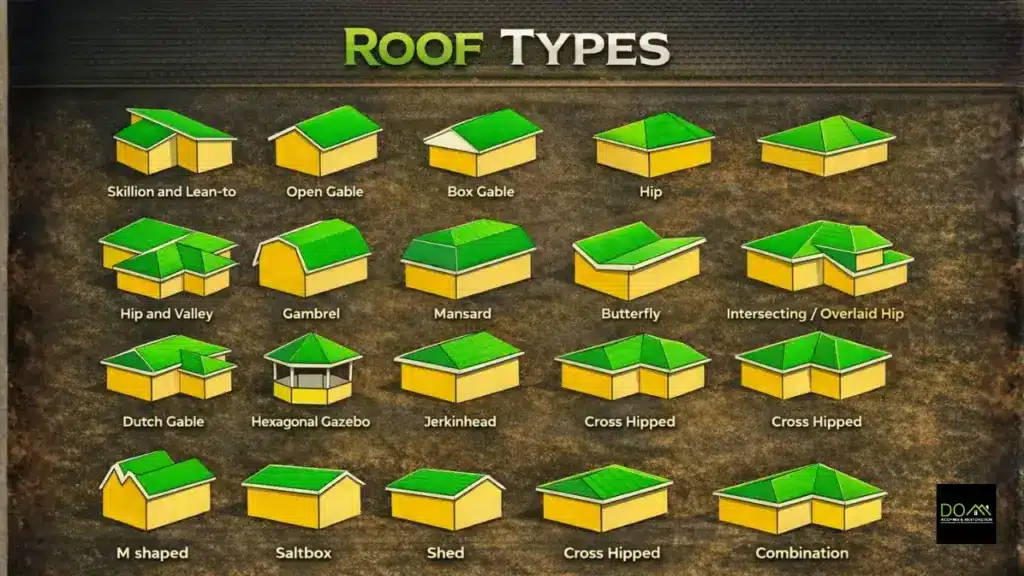
Pitched Roof Types
The measurement of your roof’s slope stands as a more important factor than most people realize. The pitch you use during roof replacement estimate requests and insurance claim processing determines how much your project will cost and what materials and workers you need. A roof with steeper angles becomes more challenging to work on because it needs additional safety gear and results in higher replacement expenses.
The following text provides a complete explanation of pitched roofs which includes their measurement process and the primary roof designs that exist in Atlanta and its neighboring suburban areas.
What Is A Pitched Roof?
Roof pitch refers to how steep your roof is. The measurement consists of the vertical height divided by the horizontal distance. A 6/12 pitch represents a roof design which elevates 6 inches for every 12 inches of horizontal space.
The roof pitch meaning is simple once you see it in action. A 3/12 roof slope is flat because it has a low pitch but a 12/12 roof slope reaches a 45-degree angle which makes it very steep.
Most residential homes fall somewhere between 4/12 and 9/12. The selected range provides proper water drainage while maintaining sufficient attic space and it remains easy to construct.
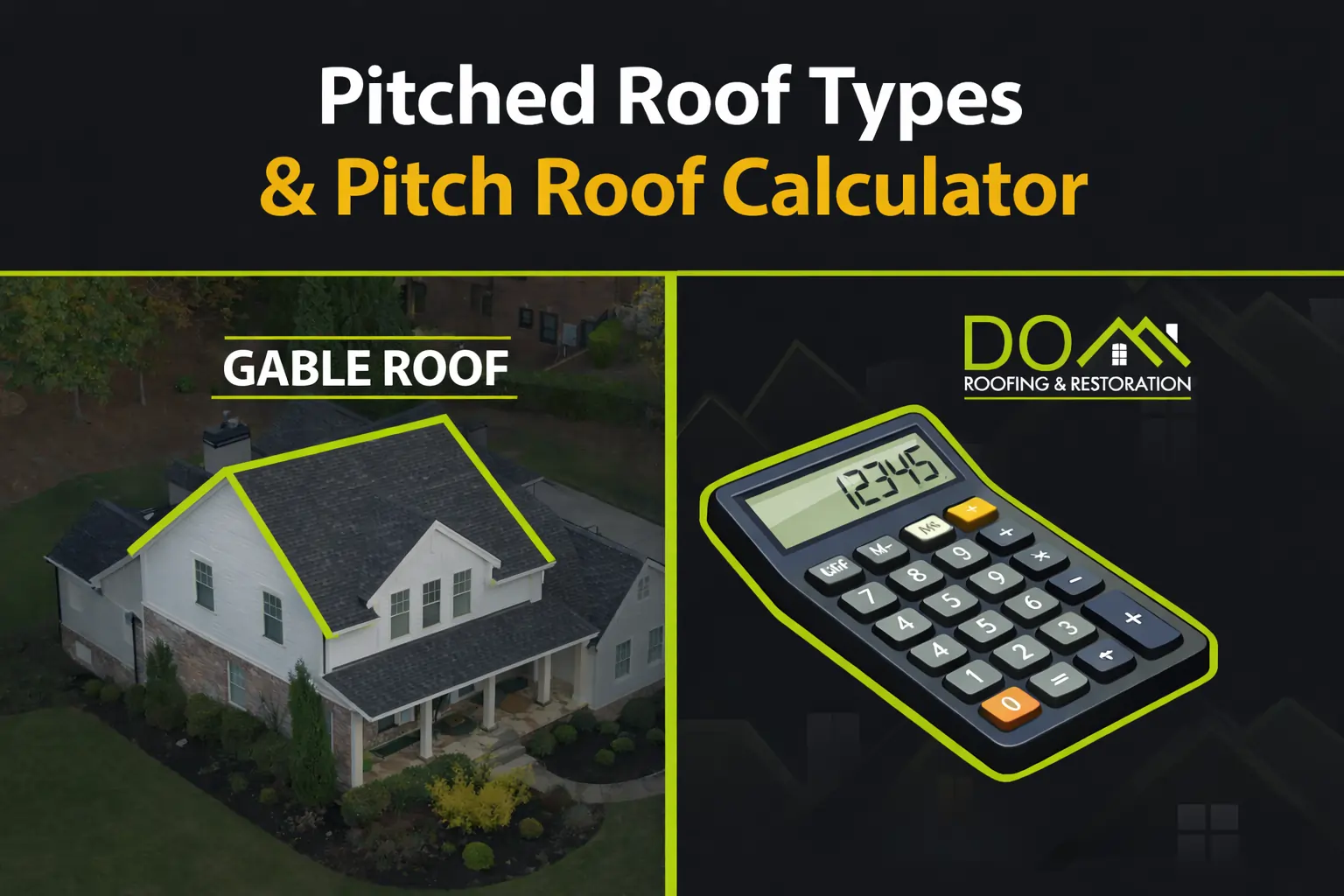
Roof Pitch Calculator
Not sure what pitch your roof has? Use our free calculator below. The application requires you to enter your rise measurement and run measurement to calculate your roof pitch and display the results as both degrees and slope percentage.
The estimation process needs this information because roofs with high pitches require additional safety equipment and longer installation periods which lead to higher costs for roof repair and roof replacement services.

Roof Pitch Calculator
Enter Rise and Run to calculate your roof pitch
How to use it: Measure the rise and run from your attic or use measurements from your roof inspection report. The calculator system determines both the walkability of your roof and the anticipated labor challenges which will occur.
How Roof Pitch Affects Your Roofing Project
Safety
Steeper roofs are more dangerous to work on. Anything above 8/12 requires fall protection equipment. The requirement for this standard exists as a legal obligation which OSHA has established. The installation of safety systems requires longer periods of time when the roof pitch becomes more extreme thus delaying the shingle installation process.
Labor Cost
Businesses need to distribute more financial resources to their staff because they require them to produce sounds at higher frequencies. A roof replacement on a 10/12 pitch will cost more than the same square footage at 5/12 simply because the work takes longer and requires more equipment. You need to understand your roof pitch when evaluating estimates because it explains the price differences between different estimates.
Roofing Material Choices
The performance of materials depends on the specific pitch being played. Asphalt shingles perform well on most residential pitches but aren’t suitable for very low slopes. Metal roofing systems function best at steeper angles when professionals perform the installation process. The installation of TPO and EPDM materials becomes necessary for flat and low-slope roofs because these materials help stop water from entering through cracks.
How to Measure Your Roof Pitch
You don’t need to climb onto your roof to get a general idea of your pitch. Here’s a simple method using your attic:
- Place a level horizontally against a rafter in your attic
- Mark a point 12 inches from where the level touches the rafter
- Measure the vertical distance from that 12-inch mark straight down to the level
- That measurement is your rise – so if it’s 6 inches, you have a 6/12 pitch
If you’d rather not crawl around your attic, any roofing contractor can measure your pitch during a free inspection.
Pitched Roof Types in Atlanta
Now let’s look at the specific roof shapes you’ll see around Atlanta and most residential neighborhoods:
Gable Roof
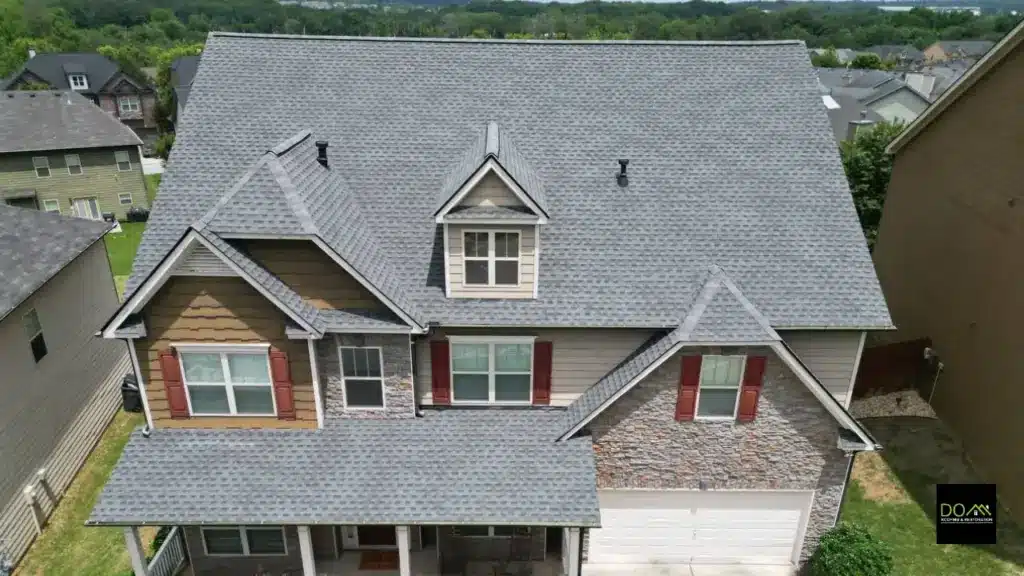 Gable roofs are the most recognizable pitched roof types in America. Look at the side of a house and if you see a triangle shape, that’s a gable roof.
They’re popular for good reasons. Gable roofs shed water and snow efficiently, provide excellent attic ventilation, and their straightforward design keeps construction and roof repair costs reasonable.
The main drawback is wind vulnerability. If the framing isn’t properly braced, gable roofs can struggle in severe storms. In areas with high winds, make sure your gable roof has adequate support.
Gable roofs work well with asphalt shingles, metal, cedar shakes, and even clay or concrete tiles depending on your home’s structure.
You’ll also see variations like crossed gables, where two gable sections meet at right angles—common on homes with more complex floor plans.
Hip Roof
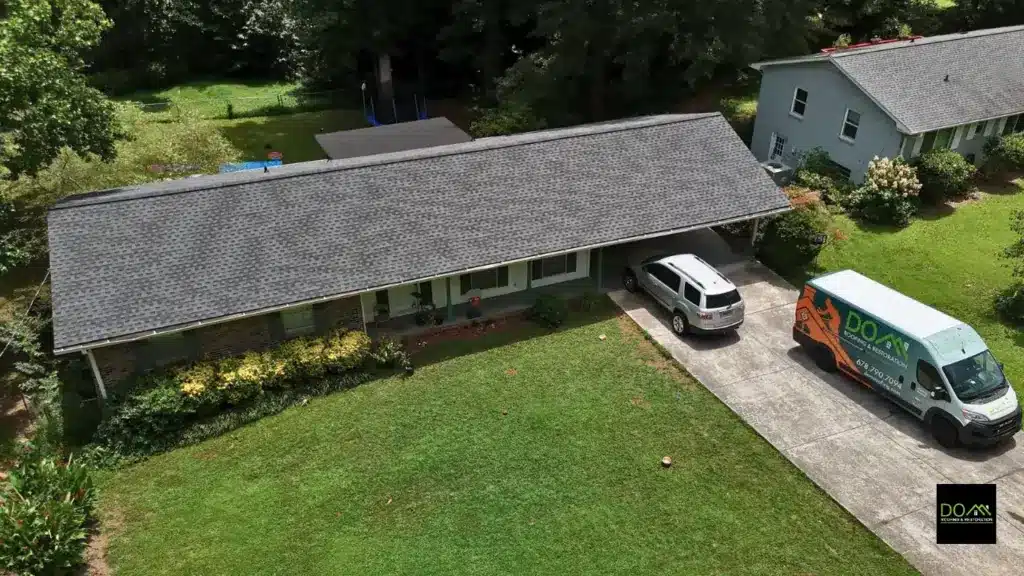 A hip roof slopes on all four sides, with the slopes typically meeting at a ridge at the top. This design creates a more stable structure than a standard gable roof.
Hip roofs handle high winds better because the inward slope on all sides reduces uplift. They’re also excellent at shedding water and snow in every direction.
The tradeoff is cost. Hip roofs have more complexity, more seams, and require more material. Expect to pay more for a roof replacement on a hip roof compared to a simple gable of similar square footage.
Proper maintenance matters here. With more ridges and valleys, hip roofs have more potential leak points that need attention over time.
Gambrel Roof
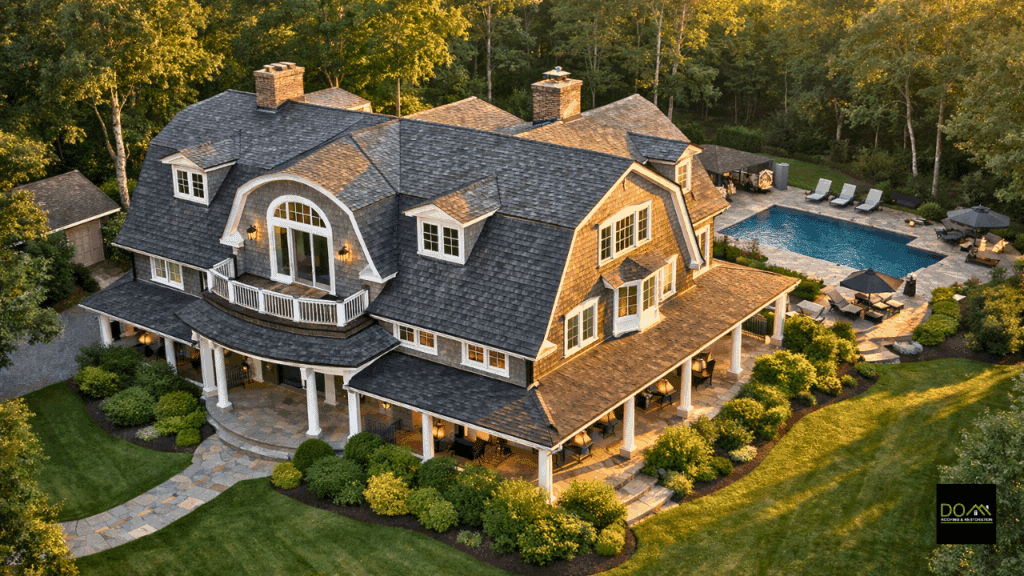 Gambrel roofs sometimes called barn roofs have two slopes on each side. The lower slope is steep, and the upper slope is shallow. You’ll recognize this style from traditional barns and Dutch Colonial homes.
The design maximizes usable space under the roof, which is why barns use it. For homes, it can create generous attic or second-floor living areas.
Gambrel roofs are relatively simple to construct since they use just two roof beams per side. However, they’re not ideal for areas with heavy snow or high winds. The steep lower section can catch wind, and snow can accumulate on the shallow upper portion.
Waterproofing the ridges is critical. Wood, asphalt, or slate shingles all work well. Metal roofing is another solid choice and requires less ongoing maintenance.
Need Help With Your Roof?
Understanding your roof pitch is the first step in any roofing project, whether you’re dealing with a leak, planning a full roof replacement, or just want to know what you’re working with.
If you have questions about your pitched roof or need a professional assessment, the team at Dom Roofing & Restoration is here to help. We handle roof repair and roof replacement throughout Atlanta and the surrounding suburbs. Give us a call to discuss your project – we’re happy to explain your options and give you a straight answer on what your roof needs.
Certified Roof Repair & Roof Replacement Team
Sugar Hill, GA 30518