Roof Academy · Residential roofing
Roof Leak or Attic Condensation? Winter Ceiling Stains in Suwanee and Sugar Hill
Who should you call? If a ceiling stain appears after rain, start with a roofer who investigates leaks. If attic surfaces become wet during cold weather, ask for an assessment of both the roof and attic moisture conditions. Plumbing, HVAC, or home-performance specialists may also be needed, depending on where the water originates.
A brown ceiling ring, damp insulation, or water on attic framing deserves attention. But the visible mark cannot tell you whether rain is entering through the roof, indoor moisture is condensing, or a pipe or HVAC component is leaking. Finding the source comes before choosing the repair.
For Suwanee and Sugar Hill homeowners, winter brings two useful clues to track: rain and cold spells. As regional context, NOAA’s Atlanta climate normals show about 4.6 inches of precipitation in each winter month. Those historical averages are not a forecast, but they explain why winter roof care here should address rain as well as cold.
Clues that help separate a leak from condensation
GAF’s guidance on roof condensation explains that the symptoms overlap. Moisture appearing during or after rain can suggest a leak; moisture appearing across attic surfaces during cold spells can suggest condensation. Neither pattern proves the cause, and both problems can occur together.
| What you notice | What it may suggest | What still needs checking |
|---|---|---|
| A stain becomes wet after rain | Rainwater entering the roof or another exterior joint | The entry point and water path; they may be away from the ceiling stain |
| Droplets or frost across several attic surfaces during a cold spell | Condensation on cold materials | Indoor moisture, air leaks, exhaust routing, and the attic’s design |
| Wetness near a pipe, duct, or air handler | A plumbing or HVAC source, or water traveling nearby | The equipment and connections, alongside possible roof entry points |
| A patch becomes wet again after a roof repair | An unresolved source, another leak, or moisture within the assembly | Fresh evidence and the earlier repair scope before repeating the same work |
Photograph the area and record when it changes. A dry, unchanged stain can remain after a repair. New dripping, spreading discoloration, or damp materials require further investigation. Do not assume that a dry-weather appearance rules out every leak.
Who to call for condensation in the attic
Choose someone who can explain how they will investigate the moisture source, not simply quote a new vent. A roofer familiar with attic conditions can evaluate roof entry points, roof vents, and visible roof-related damage. DOM offers attic and roof ventilation services; describe the symptoms when requesting an assessment.
The findings may call for another specialist:
- HVAC contractor: when ducts, an air handler, a condensate drain, or mechanical ventilation may be involved.
- Plumber: when water supply or drain piping is a possible source.
- Home-performance or building-envelope specialist: when air leakage, insulation, humidity, or an unusual roof assembly needs evaluation.
When calling, ask: “Can you assess the roof and accessible attic, explain the likely source, and identify whether another trade is needed?” That answer helps establish what the visit can actually resolve.
Why adding a roof vent may not solve it
Condensation forms when a surface is cold enough for moisture in the surrounding air to turn into liquid water. The Department of Energy’s Building America guidance describes warm, moist air escaping from living spaces or attic ducts and reaching cold roof sheathing or framing. Controlling the source and movement of that moisture matters alongside drying.
In a vented attic, a professional should consider intake and exhaust openings, clear air paths, air leakage from the house, insulation, and moisture sources together. A properly designed unvented attic follows a different approach; adding outside vents can conflict with its design. There is no universal “more vents” solution for every house.
ENERGY STAR’s attic guidance also flags bathroom, kitchen, or dryer exhaust that releases moist air into the attic. These details need attention before assuming that roofing materials alone are responsible. Insulation changes should be considered with air sealing and moisture control, rather than used to cover a damp problem.
What a useful inspection should establish
Ask for findings that connect the symptom to a proposed scope of work. Depending on access and conditions, the assessment should consider:
- The history: when moisture appears, weather conditions, previous repairs, and any recent changes to insulation, equipment, or exhaust fans.
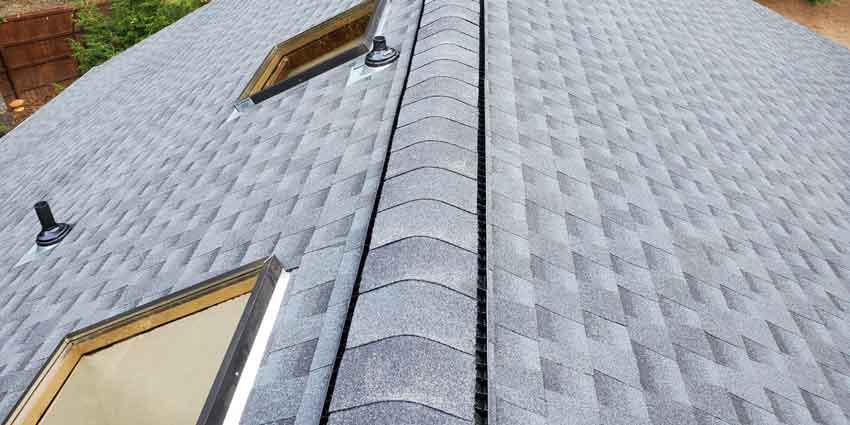
- Roof entry points: shingles, pipe boots, flashing, roof-to-wall joints, and other details relevant to the location.
- Accessible attic conditions: localized water trails or broader wetness, insulation condition, and visible moisture sources.
- The proposed next step: what is confirmed, what remains uncertain, whether further investigation is needed, and how the repair addresses the evidence.
A photograph of the ceiling alone is not enough to justify a full roof replacement. Ask for the reason behind each recommendation and any limitations caused by concealed materials or inaccessible areas.
What to do while you arrange help
Take photos from safe locations, note the dates, and move belongings away from drips if you can do so safely. Share earlier repair records. Stay clear of sagging ceilings and water around electrical fixtures, and seek urgent professional assistance for those conditions. Do not climb onto a wet roof or enter an unsafe attic to collect evidence.
If rainwater entry is confirmed, the repair may involve a specific boot, flashing detail, or damaged roof section. GAF identifies several possible leak sources, so the correct work depends on what inspection reveals. If condensation is confirmed, correcting the moisture conditions is essential; replacing shingles alone may leave that problem unresolved. Interior drying and repairs may also be necessary.
Can this wait until spring?
Arrange an assessment when materials are actively wet or the stain keeps returning. The first decision is how to address the water and limit further damage. That may involve targeted repairs, temporary protection, or investigation by another trade. The scope and timing of permanent roof work depend on the findings and suitable working conditions.
Once the source is addressed, use our winter roof preparation guide to plan preventive maintenance for the rest of the season.
Get the source checked before choosing a repair
For a home in Suwanee or Sugar Hill, contact DOM Roofing & Restoration about roof leaks or attic ventilation concerns. Tell us when the moisture appears, what is getting wet, and whether a previous repair changed the symptoms.
Request a roof assessment or call (678) 766-9646.