If Wind Lifted Shingles but They Lay Flat Again, Will They Reseal?
At a glance
Usually, no. If wind broke the sealant bond between asphalt shingles, manufacturer guidance says those shingles are unlikely to reseal on their own. GAF specifically says broken sealant bonds are unlikely to re-seal and may require hand-sealing when there is no other damage present. Owens Corning also notes that this kind of wind damage can be hard to see, even though the roof surface no longer functions as intended when the adhesive seal is broken. See GAF’s wind-damage bulletin and Owens Corning’s storm-damage guidance.
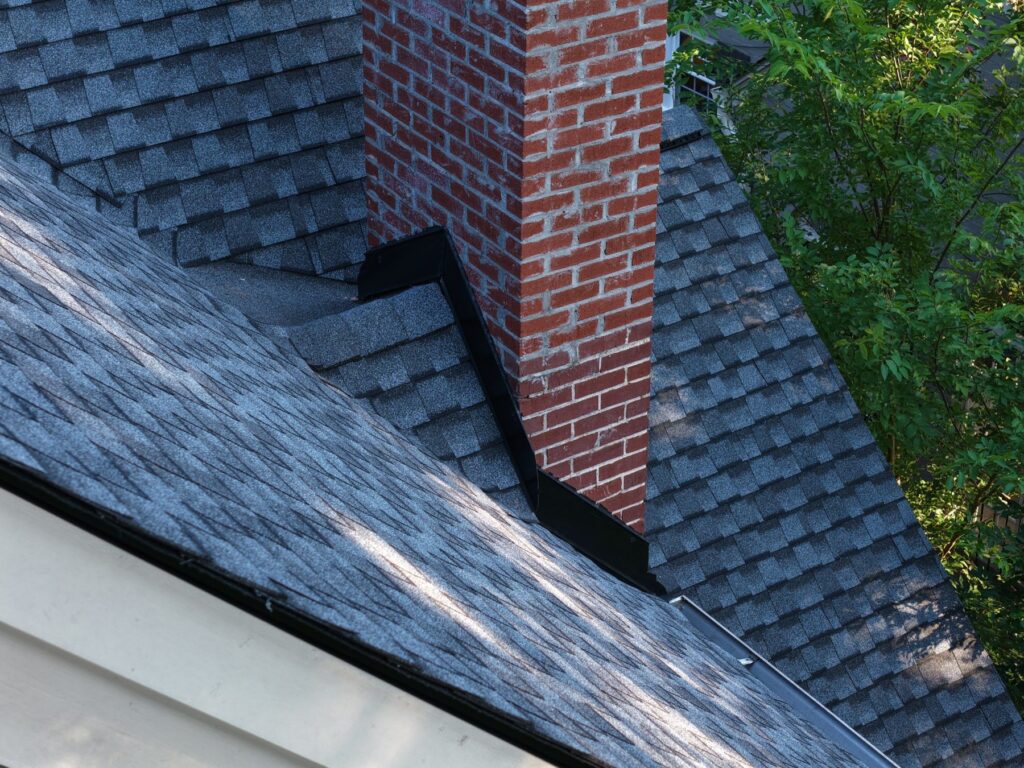
If wind lifted shingles and they seem to have settled back down, will they reseal on their own?
That means a roof can look fine from the street after a storm and still need repair. Waiting until the next leak or the next shingle blow-off is risky because the problem may already be present even if the tabs are lying flat again.
Why flat-looking shingles can still be storm-damaged
Asphalt shingles are designed with self-sealing strips that bond shingles together to help resist wind uplift. CertainTeed describes those strips as part of how shingles resist wind uplift, and Owens Corning explains that shingles need to stay sealed together to remain an effective water-shedding roof surface. See CertainTeed’s shingle anatomy overview and Owens Corning’s storm-damage guidance.
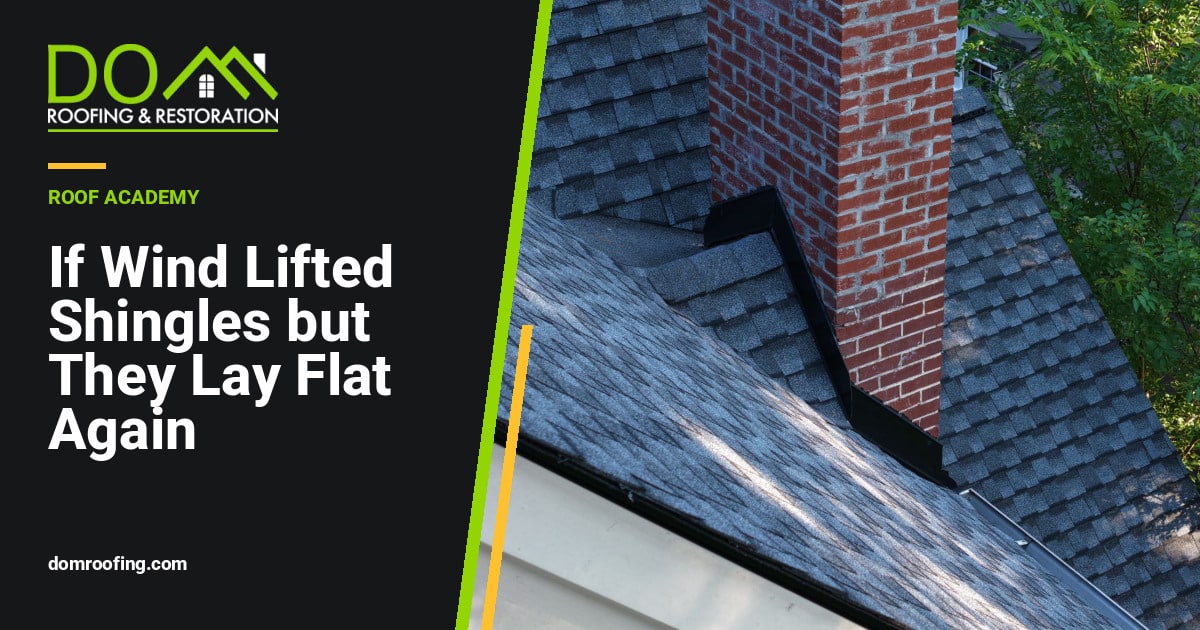
During a wind event, a tab can lift just enough to break that bond. After the gust passes, the tab may settle back into place and look normal from ground level. But the important part is not whether it lies flat today. The important part is whether the shingle is still properly sealed.
GAF says wind events can break the sealant bond that seals shingles together, and once that bond is broken, the shingles are unlikely to reseal on their own. In the manufacturer’s guidance, if the shingles have no other damage, hand-sealing may be the appropriate corrective step. That is very different from a wait-and-see approach. Source: GAF extraordinary wind bulletin.
What a roofer is looking for after suspected uplift
Because broken seals can be subtle, the inspection question is not just “Are any shingles missing?” A better question is “Did the storm leave shingles unsealed, creased, torn, or otherwise weakened?”
Possible signs of broken shingle seals
- Tabs that appear flat but can no longer be confirmed as sealed
- Subtle lines below the shingle above, which Owens Corning says can indicate the seal was broken and the shingle flapped in the wind
- Localized granule disturbance or surface wear after wind exposure
- Damage concentrated at more exposed roof areas where uplift forces are higher
Owens Corning notes that some wind damage is not easy to see, especially when the adhesive seal has been broken, and it mentions thin horizontal lines about 1 to 2 inches beneath the shingle above as a possible clue that the shingle was flapping in the wind. See Owens Corning.
When the issue may be more than a simple reseal repair
Not every lifted tab is just a hand-sealing issue. If the shingle is also creased, torn, brittle, contaminated, or otherwise damaged, the needed scope may be different. GAF also warns that some wind damage can harm the shingle surface and lead to deterioration months or years later, describing this as latent damage. The same bulletin says high wind exposure may cause granule loss and may loosen granules enough to potentially separate them from the underlying asphalt layer. See GAF’s bulletin.
In plain terms, that means the repair decision depends on what happened beyond the broken bond. If the tab only lost adhesion, targeted repair may be enough. If the tab or surrounding shingles were physically damaged, replacement of individual shingles or a larger repair area may be needed. Concealed conditions and the final scope require onsite assessment.
Can you safely leave it alone if there is no leak yet?
That is not the safest assumption. A broken seal is a functional problem even before interior water shows up. Owens Corning says shingles need to stay sealed together as one water-shedding roof surface to remain effective against the elements. If that bond has failed, the roof may be more vulnerable in the next wind-driven rain or the next gust event. See Owens Corning.
Also, a roof may not show immediate interior leakage after the original storm. GAF’s discussion of latent damage is the reason many homeowners get caught off guard later. A tab that survived one event in a weakened state may not perform the same way in the next one. Source: GAF.
When hand-sealing may be appropriate
Based on the manufacturer guidance provided here, hand-sealing may be appropriate when wind broke the sealant bond and the shingles sustained no other damage. GAF says that in that situation it recommends hand-sealing the shingles to help ensure adequate sealing. GAF also explains that hand-sealing is a method used to assure and enhance shingle sealing with ASTM D4586 roofing cement, and that installers should follow the product’s application instructions for the number and location of cement dabs while performing repairs. See GAF wind bulletin and GAF hand-sealing guidance.
That does not mean every lifted-looking shingle should simply be glued down without evaluation. The correct repair method has to match the installed shingle product and current manufacturer instructions. If tabs are damaged rather than merely unsealed, hand-sealing alone may not be the right answer.
When replacement concerns enter the conversation
Replacement concerns start to enter the picture when inspection shows the issue is broader than isolated broken seals. Examples can include multiple affected areas, tabs that have been physically damaged, or surrounding shingles that may not tolerate limited repair well. The key point for homeowners is that “they settled back down” does not answer the real scope question.
A focused inspection helps separate three different situations:
- No functional storm damage found: the roof may not need corrective work.
- Broken sealant bonds with no other damage: targeted repair such as hand-sealing may be appropriate under manufacturer guidance.
- Broken seals plus physical shingle damage: repair scope may expand beyond simple hand-sealing and may include shingle replacement or a larger roof-repair discussion.
The final scope depends on the actual roof condition, not on how normal the roof looks from the driveway.
What homeowners in Buford should do next
If you suspect wind lifted shingles, the practical next step is simple: schedule a professional roof inspection instead of waiting for a leak. This is especially true if the roof looks normal from the ground but the storm was strong enough to raise concern.
From the ground, you can note obvious signs such as displaced tabs, shingle pieces in the yard, or anything newly out of line. But do not rely on a street-level view to rule out broken seals. Owens Corning specifically notes that this damage can be difficult to see, and the evidence provided here supports that caution. See Owens Corning.
If you need help with the next step, DOM Roofing & Restoration offers roof repair services, and you can request a professional roof or gutter inspection for your home. If inspection findings show broader damage than a localized repair, a separate roof replacement evaluation may be appropriate. Concealed conditions and the final scope require onsite assessment of the actual shingles, flashing, fasteners, and adjacent roof areas.